Testing standard

ISO 12625-4/-5

Tissue paper and tissue products — Part 4: Determination of tensile strength, stretch at maximum force and tensile energy absorption; and Part 5: Determination of wet tensile strength

Written and technically reviewed by Dak System Inc. engineeringLast reviewed

ISO 12625-4 determines the dry tensile strength, stretch at maximum force and tensile energy absorption of tissue paper and tissue products; ISO 12625-5 determines the wet tensile strength of the same materials after soaking. Both stretch a 50 mm wide strip to break at a constant rate of elongation, and results are reported separately for the machine and cross directions. The current editions are ISO 12625-4:2022 and ISO 12625-5:2024, both third editions.

At a glance

Test type
Tensilethe specimen is pulled apart
Published by
ISO
Edition
ISO 12625-4:2022

What the test does

A strip of tissue 50,0 ± 0,5 mm wide is clamped across its full width at each end and stretched to break at a constant rate of elongation. Part 4 does this on conditioned dry tissue over a 100 ± 1 mm span at 50 mm/min — the rate is 50 % of the initial span per minute, so a shortened 50 mm span runs at 25 mm/min. Part 5 does the same on tissue just wetted. On a vertical machine the strip is looped under the rod of a Finch Cup soaking device held in the lower clamp, the water container rises to immerse the rod 20 ± 1 mm deep, and after 15 s it drops away and the pull begins at 50 ± 2 mm/min. A horizontal machine uses a soaking device placed between the clamps instead.

What it measures, and why it matters

Part 4 reports tensile strength in newtons per metre, stretch at maximum force as a percentage, and tensile energy absorption — the area under the force–elongation curve per unit area, the closest single figure to the work a sheet absorbs before giving way. Dividing the first and last by grammage gives the tensile index and the tensile energy absorption index, so a light sheet compares fairly with a heavy one. Part 5 reports wet tensile strength and, against a dry result from the same sample, wet-tensile-strength retention. For a kitchen towel or a moist wipe that ratio is the product: a sheet strong dry that collapses wet fails in the hand. Results are reported separately for machine and cross direction, because tissue is strongly anisotropic and one averaged number hides the direction that will actually tear.

Test piece and sampling

Both parts use the same strip. What differs is how many are taken and what happens to them before the pull.

Width
(50,0 ± 0,5) mmThe width is fixed, and it is the w that divides into the force to give a strength in newtons per metre.
Length
At least 150 mmEdges straight, smooth and parallel, avoiding perforations and faults.
Short products
Cut the longest piece possiblePart 4 then uses a (50 ± 1) mm test span. Toilet tissue sheets of about 98 mm are the standard's own example.
Converted products
Tested as received, whatever the ply countA single finished sheet is generally suitable. Unconverted tissue is tested as a single ply unless the parties agree otherwise.
Number — Part 4
At least 10 machine direction and 10 cross direction
Number — Part 5
At least 10 specimens, one MD and one CD test piece from eachAt least 20 test pieces from each sample.
Conditioning
ISO 187, with sampling to ISO 186Condition before cutting, and keep the pieces in the standard atmosphere.
Accelerated ageing (Part 5, optional)
(80 ± 2) °C for 30 min, then condition at least 1 hAlso called curing or rapid ageing. It develops the strength a wet-strength agent would otherwise reach over weeks. For production inspection, (105 ± 2) °C for 15 min may be used. The report must state whether it was done.
Do not touch the test area
Part 4 says so in the procedure. A sheet weighing grams per square metre carries whatever a finger leaves on it.

Results are calculated and reported separately for the machine and cross direction. Tissue is strongly anisotropic, and one averaged figure hides the direction that will actually tear.

Rate of elongation and test span

Rate — Part 4
50 % of the initial test span length per minute50 mm/min for a 100 mm span, 25 mm/min for a 50 mm span.
Test span — Part 4
(100 ± 1) mm
Rate — Part 5
(50 ± 2) mm/min
Span — Part 5, vertical
Total span (100 ± 1) mm, test span (50 ± 1) mmThe piece is looped under the Finch Cup rod, so the test span is half the total. Rod to upper clamp is pre-set at (43,5 ± 1,0) mm, reduced to (23,5 ± 1,0) mm for very short products.
Soak — Part 5
15 sThe water container is raised and locked so that the water completely surrounds the cylindrical rod, immersing it to a depth of (20 ± 1) mm; after the soak the container drops away and the pull begins.
Slack correction
Elongation starts at (0,25 ± 0,05) N
Clamping force
Not greater than 0,25 N, i.e. 5 N/mPart 4 states this as a limit. Tissue crushed at the jaw breaks at the jaw.

Calculations

Tensile strengthS

S = (F / w) × 10³

S
tensile strength, N/m
F
mean maximum tensile force from the acceptable results, N
w
initial width of the test piece, mm — 50 mm

Reported to three significant figures. Because the width is fixed, a tissue result is a force per unit width, not a stress.

Tensile indexI

I = S / g

I
tensile index, N·m/g
S
tensile strength, N/m
g
grammage, g/m², to ISO 12625-6

Dividing by grammage is what lets a light sheet be compared fairly with a heavy one.

Stretch at maximum forceA

A = (ε / l) × 100

A
stretch at maximum force, %
ε
mean elongation at maximum force, mm
l
length between the clamps before elongation, mm

Reported to the first decimal place.

Tensile energy absorptionZ

Z = E / (w × l) × 1 000

Z
tensile energy absorption, J/m²
E
work equivalent to the area under the force–elongation curve up to maximum force, mJ
w
initial width, mm — 50 mm
l
initial test length, mm — standard 100 mm

The area is taken up to the point of maximum force, not to break. It is the closest single figure to the work a sheet absorbs before giving way.

Tensile energy absorption indexI₂

I₂ = Z / g

I₂
tensile energy absorption index, J/g
Z
mean tensile energy absorption, J/m²
g
grammage, g/m², to ISO 12625-6
Wet-tensile-strength retention

Wet tensile strength as a percentage of the dry

wet
tensile strength of the soaked test piece, from Part 5
dry
tensile strength of a different test piece from the same sample, conditioned to ISO 187

The two figures come from different test pieces out of the same sample, not from the same piece tested twice. For a kitchen towel or a moist wipe this ratio is the product.

How the test runs

  1. 01Sample to ISO 186 and condition to ISO 187, before cutting.
  2. 02Cut test pieces (50,0 ± 0,5) mm wide and at least 150 mm long, avoiding perforations.
  3. 03For Part 5, decide whether accelerated ageing applies, and record the decision.
  4. 04Check the calibration and the zero, and that the clamps meet the alignment requirement.
  5. 05Set the test span and the corresponding rate of elongation.
  6. 06For Part 5 on a vertical machine, clamp the Finch Cup in the lower clamp and pre-set the rod-to-clamp distance.
  7. 07Place the piece so observable slack is removed but no significant strain is applied; do not touch the test area.
  8. 08Clamp with no more than 0,25 N, aligning the piece parallel to the pulling direction.
  9. 09For Part 5, raise the water container, soak for 15 s, then lower it and start the pull.
  10. 10Run to break, recording force against elongation.
  11. 11Discard pieces breaking within 5 mm of the clamping line (Part 4), or within 2 mm of the upper clamp or on the rod (Part 5).
  12. 12Continue until 10 valid results are available in each direction.
  13. 13Calculate and report machine and cross direction separately.

If more than 20 % of the pieces cut from a specimen break at the clamping line — or on the rod, under Part 5 — reject every reading from that specimen and inspect the apparatus before going on. The rule exists because a jaw problem produces plausible low numbers rather than an obvious fault.

Grips and fixtures for this method

Self-identifying

Load Cells

The choice that decides whether the test is possible at all. Part 4 requires the force measurement to be accurate to ±1 % of reading or ±0,025 N, whichever is greater — a cell chosen for the frame rather than for tissue cannot see that floor.

Specifications
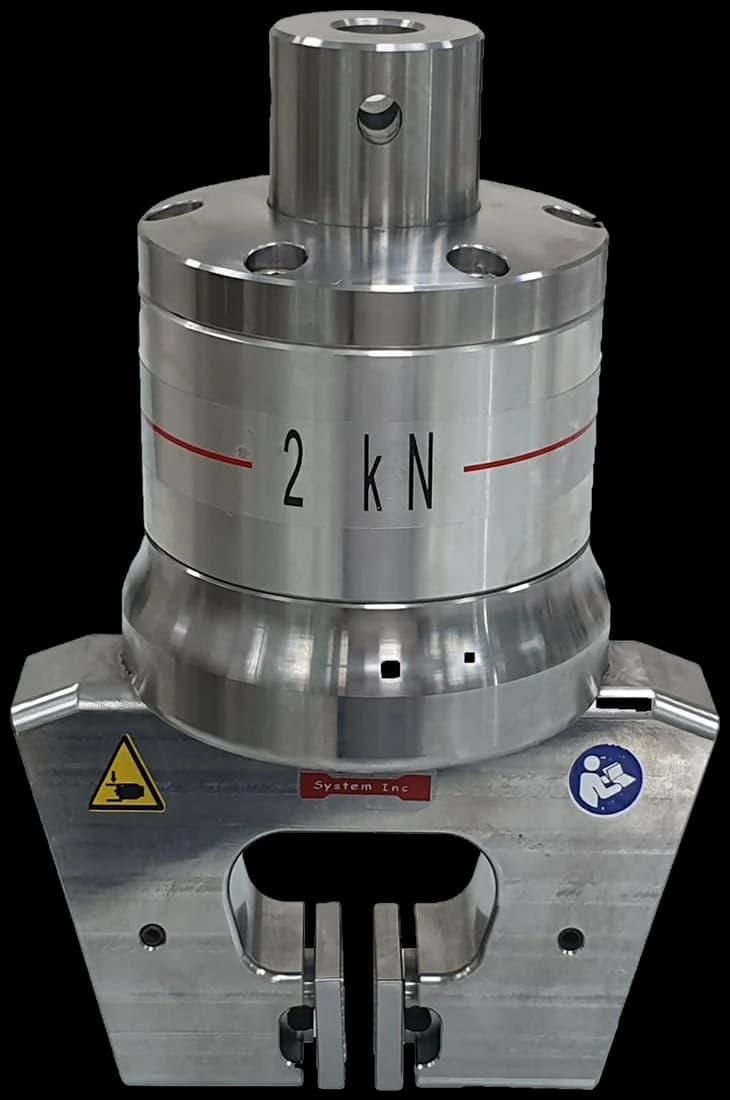
2 kN pneumatic vice action grip with its capacity engraved on the body

2 kN Pneumatic Grip

Air-driven vice action for paper and tissue, with the clamping force adjustable — which the method requires, because it caps clamping at 0,25 N. Both parts also need a clamp at least 50 mm wide gripping along a straight line across the full width of the piece, so the faces are specified to the test piece rather than taken as standard.

Specifications

What the report has to contain

  • Reference to ISO 12625-4:2022 or ISO 12625-5:2024
  • Description and identification of the sample, including product category and dimensions
  • Date and place of testing
  • Conditioning atmosphere
  • Test span length used, where it is not the standard one
  • Tensile strength in N/m, machine and cross direction separately
  • Stretch at maximum force, and tensile energy absorption, where required
  • Tensile index and tensile energy absorption index, where required, with the grammage they were calculated from
  • For Part 5, the wet tensile strength and, where calculated, the retention
  • For Part 5, whether accelerated ageing was used and by what procedure
  • Number of valid test pieces, and any specimen rejected with the reason

What the machine must be capable of

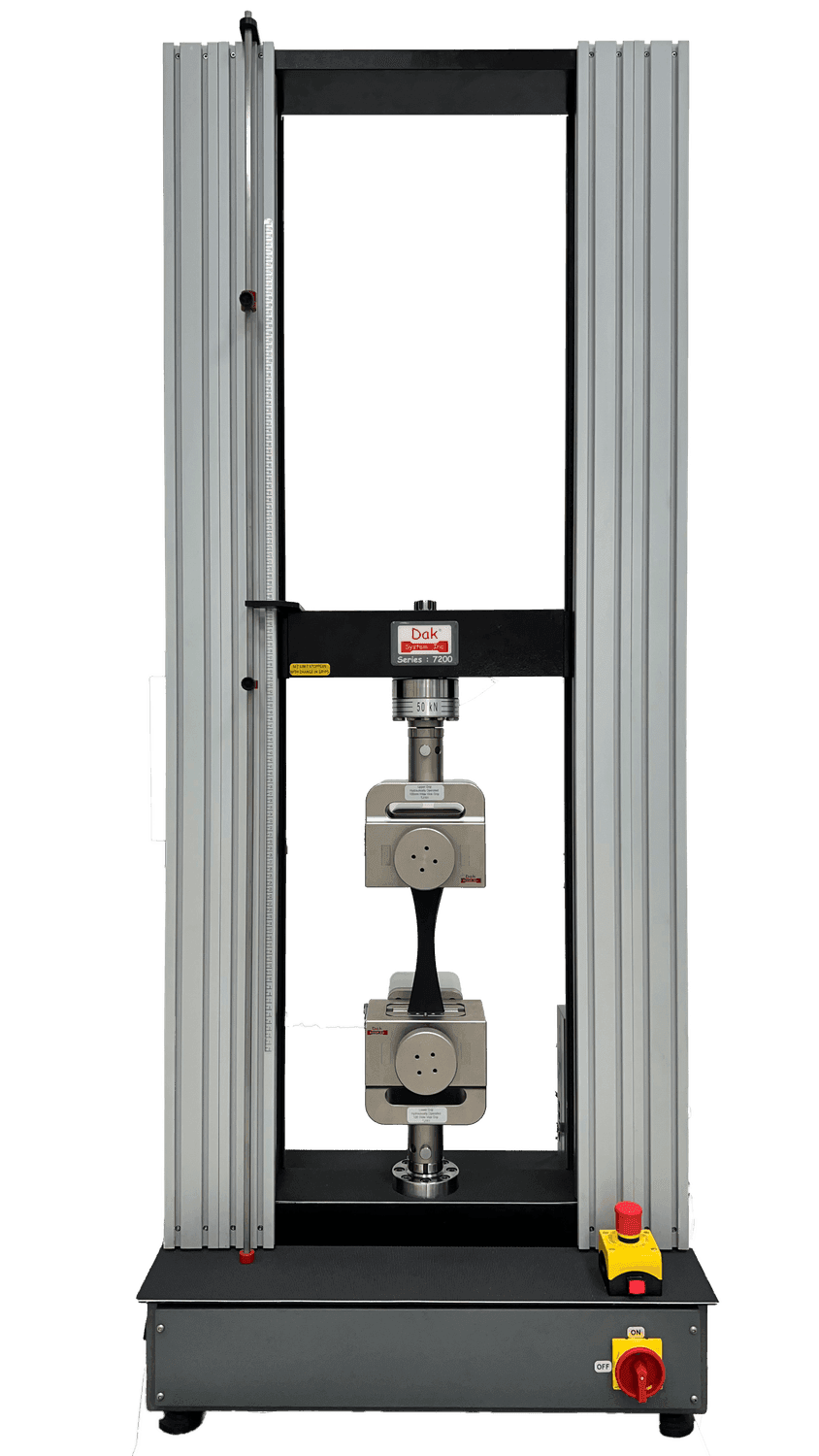
Very little force, resolved very finely. The force-measuring system must be accurate to ±1 % of reading or ±0,025 N, whichever is greater, and verified to ISO 7500-1; the apparatus must conform to ISO 1924-2. That 0,025 N floor decides the machine, because a load cell sized for the frame rather than for tissue cannot see it. Elongation is recorded to ±0,1 mm and does not begin counting until 0,25 ± 0,05 N, the slack correction. Clamps must be at least 50 mm wide, grip along a straight line across the full width without damaging the sheet, and stay parallel within 1°. Tensile energy absorption needs the area under the curve to within ±2 %. Under Part 5 the lower clamp holds the Finch Cup, not a specimen.

What goes wrong in practice

Clamping too hard. Part 4 caps the clamping force at 0,25 N for a reason: tissue crushed at the jaw breaks at the jaw. Breaks within 5 mm of the clamping line are discarded under Part 4, and within 2 mm of the upper clamp or on the rod under Part 5; if more than a fifth of a specimen's pieces fail that way the whole set is rejected and the apparatus inspected. Touching the test area puts moisture and oil into a sheet weighing grams per square metre; skipping conditioning moves every result at once. On wet tests, an overrun soak or a rod left damp between pieces both push the numbers the same way, and neither leaves a trace.

Part 4, Part 5 and the parent paper method

ISO 12625-4ISO 12625-5ISO 1924-2
MaterialTissue, dryTissue, soakedPaper and board
Rate50 % of the span per minute(50 ± 2) mm/min20 mm/min
Test span(100 ± 1) mm(50 ± 1) mm, loopedAs specified for paper
WettingNoneFinch Cup or trough, 15 sNone
ReportsStrength, stretch, TEA and the indicesWet strength, and retention against a dry resultTensile properties of paper

ISO 1924-2 is the parent apparatus specification that both tissue parts point back to, but it is not a substitute for either: it runs at a different rate on a different material, so a paper result and a tissue result are not interchangeable figures.

Questions we are asked about this test

What is ISO 12625-4?

It is the international method for the dry tensile properties of tissue paper and tissue products. A strip (50,0 ± 0,5) mm wide is stretched to break over a (100 ± 1) mm span at a constant rate of elongation, and the method reports tensile strength in newtons per metre, stretch at maximum force as a percentage, and tensile energy absorption, plus the tensile index and tensile energy absorption index calculated against grammage. The current edition is ISO 12625-4:2022, the third, which cancels the withdrawn 2016 edition.

What is ISO 12625-5, and how does it differ?

It is the companion method for wet tensile strength, currently ISO 12625-5:2024. The same strip is soaked with water immediately before the pull rather than tested dry. On a vertical machine the piece is looped under the rod of a Finch Cup soaking device held in the lower clamp, the water container is raised so the rod is immersed to (20 ± 1) mm, and after 15 s it drops away and the pull begins at (50 ± 2) mm/min. A horizontal machine uses a soaking device placed between the clamps instead.

What is wet-tensile-strength retention?

The wet tensile strength expressed as a percentage of the dry tensile strength of a different test piece from the same sample, conditioned to ISO 187. It is the number that matters commercially for anything meant to be used wet: a sheet that is strong dry and collapses when wetted fails in the hand, and only the ratio shows that. Note that it compares two different test pieces from one sample rather than one piece tested twice.

Why are machine and cross direction reported separately?

Because tissue is strongly anisotropic — the fibres orient with the machine direction, and the two directions can differ by a large factor. Both parts require the results to be calculated and reported separately for each direction. A single averaged figure hides whichever direction is weaker, which is the direction that will tear in service.

What load cell does a tissue tensile test need?

A low-range one, chosen for the specimen. Part 4 requires the force-measuring system to be accurate to ±1 % of the reading or ±0,025 N, whichever is greater, verified to ISO 7500-1, and the apparatus to conform to ISO 1924-2. That 0,025 N floor is the specification that decides the machine: a cell sized for the frame's capacity rather than for a few newtons of tissue simply cannot resolve the result.

Why is the clamping force limited?

Because tissue crushed at the jaw breaks at the jaw. Part 4 states that the test piece shall not be clamped with a force greater than 0,25 N, which is 5 N/m across the 50 mm width, and requires the clamps to have a means of adjusting that force. The clamps must also be at least 50 mm wide and grip along a straight line across the full width without damaging the sheet, with the clamping lines parallel within 1°.

What happens to specimens that break at the clamp?

They are discarded and replaced. Under Part 4 a break within 5 mm of the clamping line does not count; under Part 5 the exclusion is a break within 2 mm of the upper clamp or on the rod. Testing continues until 10 valid results are available in each direction. If more than 20 % of the pieces cut from one specimen break that way, every reading from that specimen is rejected and the apparatus is inspected — the pattern points at the grips rather than the tissue.

What is accelerated ageing, and when is it used?

It is a heat treatment, also called curing or rapid ageing, that develops the strength a wet-strength agent would otherwise reach over weeks of natural ageing. Part 5 gives (80 ± 2) °C for 30 min followed by at least an hour of conditioning, or (105 ± 2) °C for 15 min where production data are needed quickly. It is optional and the user decides, but the report has to state whether it was done and by what procedure, because an aged and an unaged result are not comparable.

Running ISO 12625-4/-5 on the Series 7200 and Series 9000

Dak verifies against whichever standard the method names, and where a class applies our frames sit a class tighter than it asks.

The method asks forDak supplies
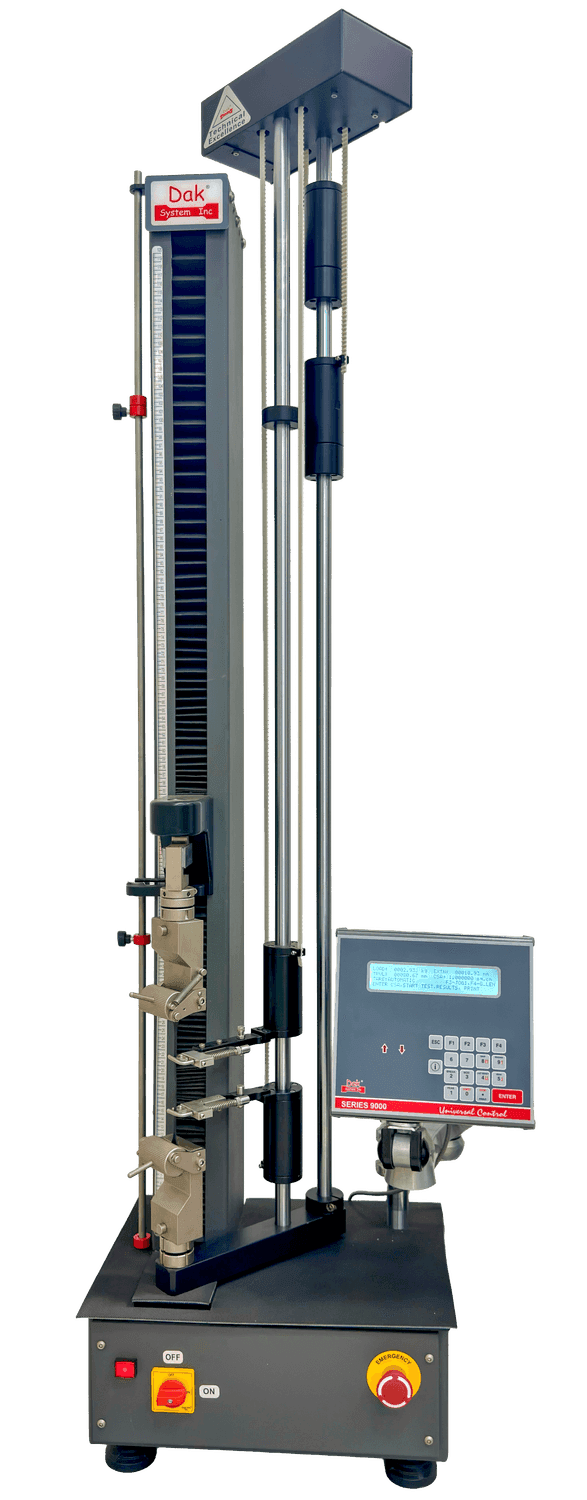
CapacityVery low, and resolution decides the machine rather than capacity. The force-measuring system must be accurate to ±1 % of the reading or ±0,025 N, whichever is greater; a load cell sized for the frame cannot see a tissue result. No specimen force range is quoted, none having been corroborated twice.Load cells from 1 kg to 60 ton on the Series 7200, and 0.5 to 100 kN on the Series 9000
Force accuracyISO 7500-1; force accurate to ±1 % of reading or ±0,025 N, whichever is greaterISO 7500-1 Class 0.5 — a class tighter than the method asks
GrippingClamps at least 50 mm wide gripping along a straight line across the full width, with adjustable clamping force not greater than 0,025 N placeholderOur a fixture built for this method, built to the specimen
EnvironmentISO 187 standard atmosphere for paper, board and pulps — conditioning before the test pieces are cut, and maintained throughout3009 series chambers, −150 °C to +400 °C — temperature only

This page describes the method as practised. The governing text is the current edition from the issuing body. Tell us what you are testing and we will answer with the machine, the fixture and a quotation.

Materials tested to it

The test it standardises

Other standards explained