Direct Compression Fixture
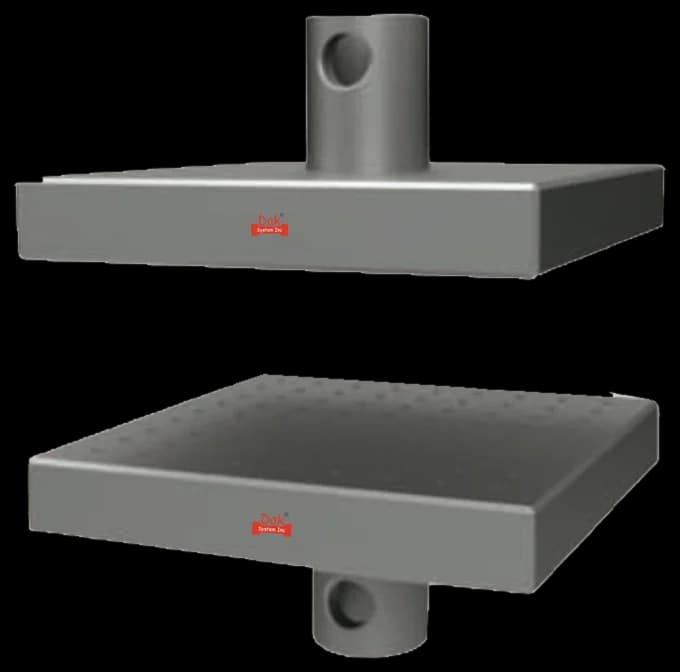
Flat, parallel platens large enough to cover the whole specimen, on a rigid support. Parallelism is the fixture requirement that decides whether the flutes collapse together or one edge goes first.
SpecificationsTesting standard
Flat crush test of corrugated board (rigid support method)
Written and technically reviewed by Dak System Inc. engineeringLast reviewed
TAPPI T825 crushes a specimen of corrugated board flat on a rigid support, at a constant deflection rate, and reports the maximum force before the flutes collapse. It applies to single-faced and single-wall board and not to double-wall or triple-wall. The current revision is TAPPI/ANSI T 825 om-24.
A specimen is cut from corrugated combined board and laid flat on an essentially rigid support. A platen descends on it at a constant deflection rate, crushing it perpendicular to the surface of the board, until the flutes collapse. The maximum force before collapse is the flat crush resistance.
The specimen cutter matters enough that the method specifies it: it has to cut through the combined board structure without crushing the areas at the cut edges, and the cutter may be circular, square or rectangular.
Flat crush measures the resistance of the flutes to a crushing force applied perpendicular to the board surface. In practical terms it measures how well the corrugator formed the flutes, and it is one of the few board properties that traces cleanly back to a single step on the production line.
The liners contribute very little in this direction. The load is carried by the standing flute structure, so a low flat crush figure points at the medium, the corrugating rolls, or the heat and moisture at the corrugator — not at liner grammage. That diagnostic value is why it is a routine process check in a corrugating plant and not only an acceptance test.
It says nothing directly about stacking strength. Edgewise crush is the property that predicts how a box behaves in a warehouse; flat crush describes the flutes themselves. A board can have adequate flat crush and poor edge crush, and specifications that name one are not satisfied by the other.
The method is satisfactory for single-faced and single-wall board and is not applicable to double-wall or triple-wall constructions, because lateral motion of the central facing or facings prevents a clean collapse.
Flat crush is destroyed by handling more easily than any other board property, and the damage never looks like damage.
A specimen that has been leaned on, stacked, or carried flat under a pile of others has already given up part of the result before the platen touches it. There is no way to detect this afterwards from the trace.
The maximum force before the flutes collapse
Reported as a force, or as a force per unit area where the specification asks for it.
The standing flute structure carries the load in this direction
A low figure points at the medium, the corrugating rolls, or heat and moisture at the corrugator. A heavy liner does not rescue a poorly formed flute.
Stacking strength — that is edgewise crush
A board can have adequate flat crush and poor edge crush. The two answer different questions and a specification naming one is not met by the other.

Flat, parallel platens large enough to cover the whole specimen, on a rigid support. Parallelism is the fixture requirement that decides whether the flutes collapse together or one edge goes first.
SpecificationsFlat crush on single-wall board is commonly under a kilonewton. A cell sized for the specimen rather than the frame is what keeps the peak resolved.
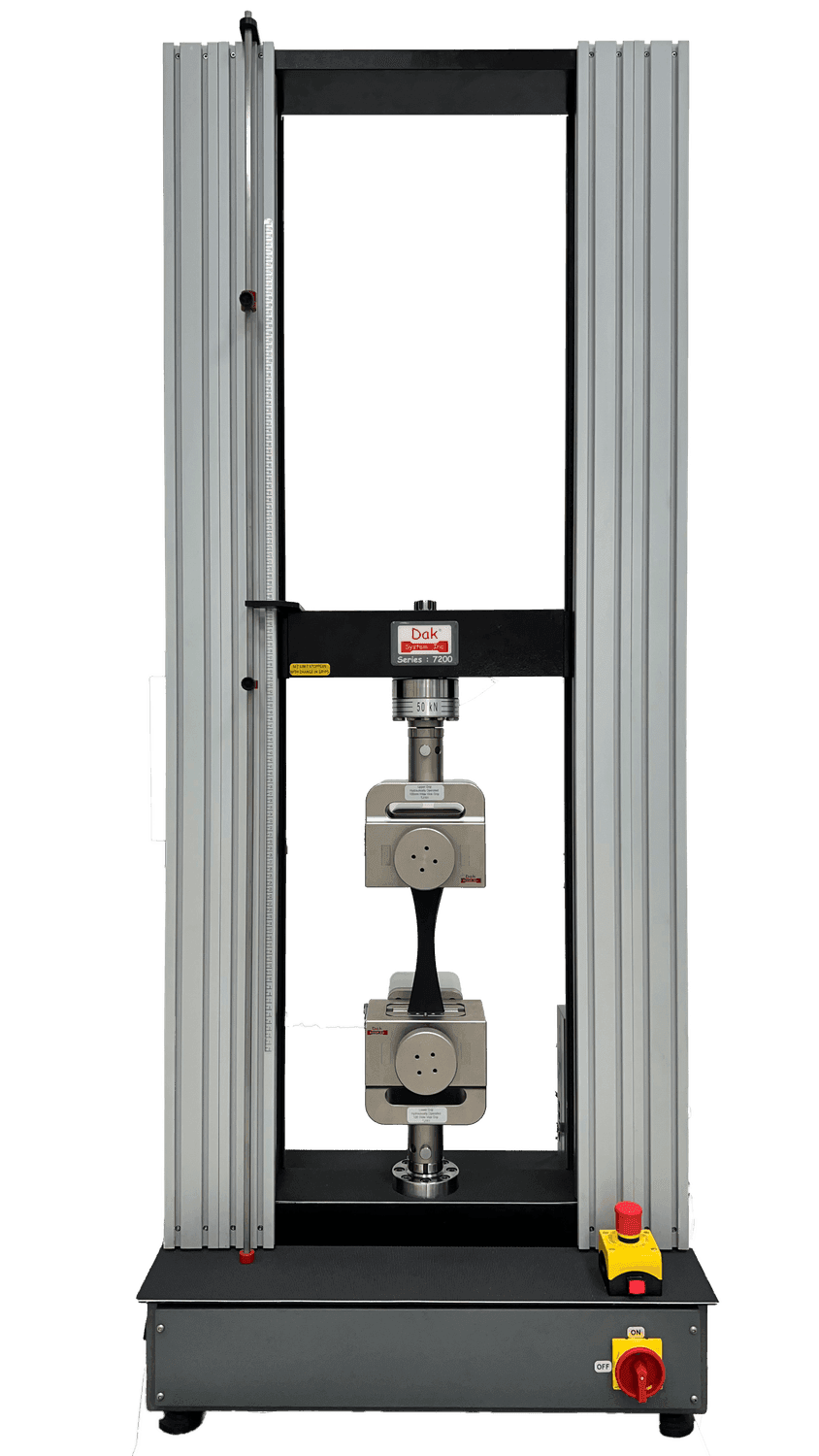
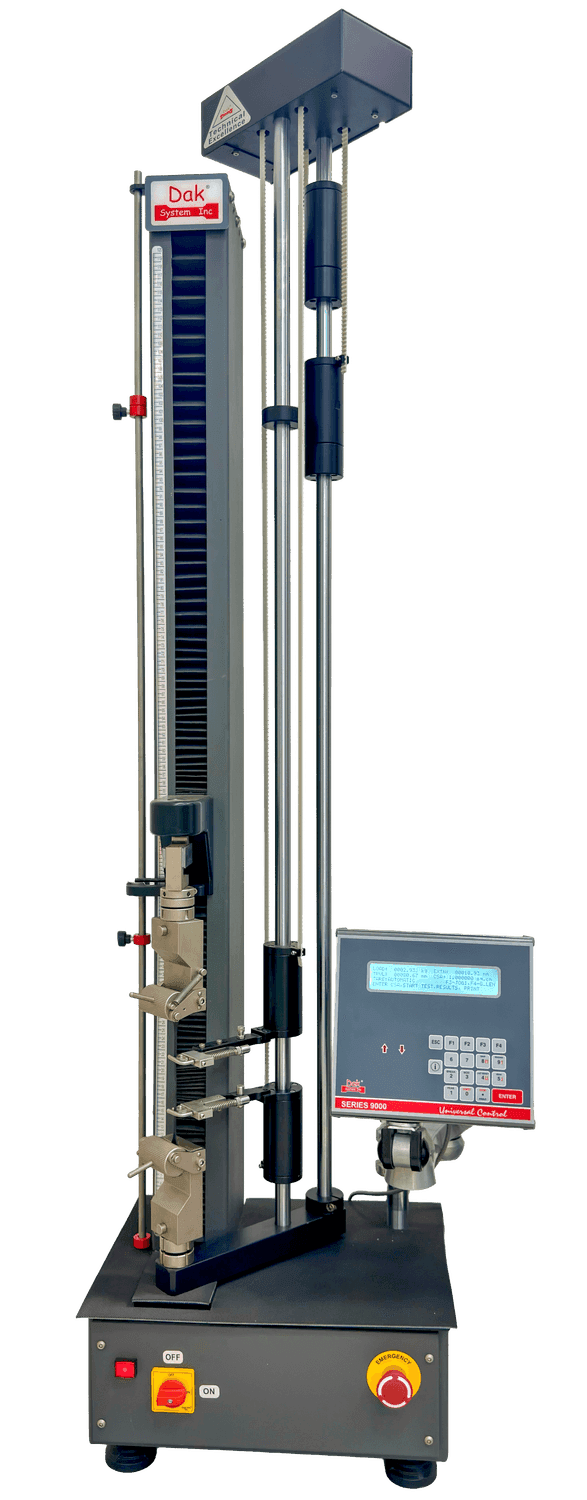
SpecificationsFlat crush on single-wall board is low-force work — commonly under a kilonewton — so a compression frame with a load cell sized for the specimen rather than the frame is what the test needs. Force accuracy to ASTM E4 over the working range is the requirement.
Platens must be flat, clean and parallel, and large enough to cover the whole specimen area. Parallelism matters more than capacity here: any tilt loads one side of the specimen first and the flutes there collapse early, giving a low result with no obvious cause. The rigid support is part of the method, not an accessory, and substituting a flexing support turns the test into TAPPI T 808.
Deflection is taken from platen separation and no extensometer is involved. The reported value is a maximum force, or a force per unit area where the specification asks for it.
Pre-crushed specimens dominate, and they are almost never recognised as such. Blunt cutters that crush the edges do the same thing at the perimeter. Running the test on double-wall board because the fixture will accept it produces a number the method does not claim. Zeroing the load with the platen already touching the specimen applies a small crush of precisely the kind being measured. And comparing a T825 result with a T 808 result is a mistake the two documents explicitly warn against.
Two of these are flat crush and give different numbers; the third measures something else entirely.
| TAPPI T825 | TAPPI T 808 | Edge crush (TAPPI T 811) | |
|---|---|---|---|
| Support | Rigid | Flexing | None — the board stands on edge |
| Loading | Constant deflection rate | Constant rate of loading | Constant rate |
| Load direction | Perpendicular to the board face | Perpendicular to the board face | On the board edge, along the flutes |
| Tells you about | Flute forming at the corrugator | Flute forming, differently measured | Stacking capability |
| Comparable with the others | No | No | No |
The two flat crush methods are explicit that they do not produce similar results. A figure quoted without saying which was used cannot be checked against a specification, and the confusion is common because both are called flat crush.
TAPPI T825 is the North American flat crush method for corrugated board using a rigid support. A specimen is laid flat and crushed perpendicular to the board surface at a constant deflection rate until the flutes collapse, and the maximum force is reported. The current revision is TAPPI/ANSI T 825 om-24.
T 808 is the other flat crush method and it rests the specimen on a flexing support and loads it at a constant rate of loading rather than a constant deflection rate. The methods state explicitly that they do not produce similar results. Both are called flat crush, which is why a figure quoted without naming the method cannot be checked against a specification.
Because the collapse is not clean. On single-faced and single-wall board the flutes buckle together and the trace shows an unambiguous peak. Where a central facing sits between two flute layers, that facing can move laterally as the load builds, so load transfers between the structures instead of peaking cleanly and there is no single force that means what flat crush resistance is defined to mean.
The corrugator, almost always. The load in this direction is carried by the standing flute structure and the liners contribute very little, so a low value points at the medium, the corrugating rolls, or the heat and moisture at the corrugator rather than at liner grammage. That is what makes it one of the most useful process checks in a corrugating plant, as distinct from an acceptance test.
No, and treating it as though it does is a common mistake. Stacking strength is governed by edgewise crush, which loads the board along the flutes rather than across them. Flat crush describes how well the flutes were formed. A board can be perfectly acceptable on one and not the other, and a specification naming one is not satisfied by the other.
Because the property being measured is the standing structure of the flutes, and almost any casual handling crushes it. A thumb pressed on a specimen, a stack left on a bench, a sample carried under something heavier — all of them pre-crush the flutes, and none of them leaves a visible mark. Cutting cleanly, handling by the edges and never stacking cut specimens is the difference between a real number and a low one nobody can account for.
A compression frame with flat, parallel platens covering the whole specimen, a rigid support, and a load cell sized for the specimen — single-wall flat crush is commonly under a kilonewton. Force accuracy to ASTM E4 over the working range is the requirement. Platen parallelism matters more than capacity, because any tilt collapses the flutes on one side before the rest.
Dak verifies against whichever standard the method names, and where a class applies our frames sit a class tighter than it asks.
| The method asks for | Dak supplies | |
|---|---|---|
| Capacity | Low — flat crush on single-wall board is commonly under 1 kN | Load cells from 1 kg to 60 ton on the Series 7200, and 0.5 to 100 kN on the Series 9000 |
| Force accuracy | ASTM E4 over the working range | Verified to ASTM E4, and to ISO 7500-1 Class 0.5 |
| Gripping | Flat parallel platens covering the whole specimen, on an essentially rigid support | Our compression anvils, built to the specimen |
| Environment | Standard atmosphere for testing paper and board | 3009 series chambers, −150 °C to +400 °C — temperature only |
This page describes the method as practised. The governing text is the current edition from the issuing body. Tell us what you are testing and we will answer with the machine, the fixture and a quotation.