ASTM D378 — read the full explanation
TensileStandard test methods for rubber (elastomeric) conveyor and transmission belting — tension testing.

Understand how the belt carries load, how its layers hold together and how it responds to repeated loading. DAK testing systems support conveyor-belt and related material evaluation, with the machine, specimen holding and measurement configured around the result your laboratory needs.
Full-thickness tension, layer adhesion and repeated-load testing place different demands on a setup. Select the frame, working force range, grips and extension measurement together.
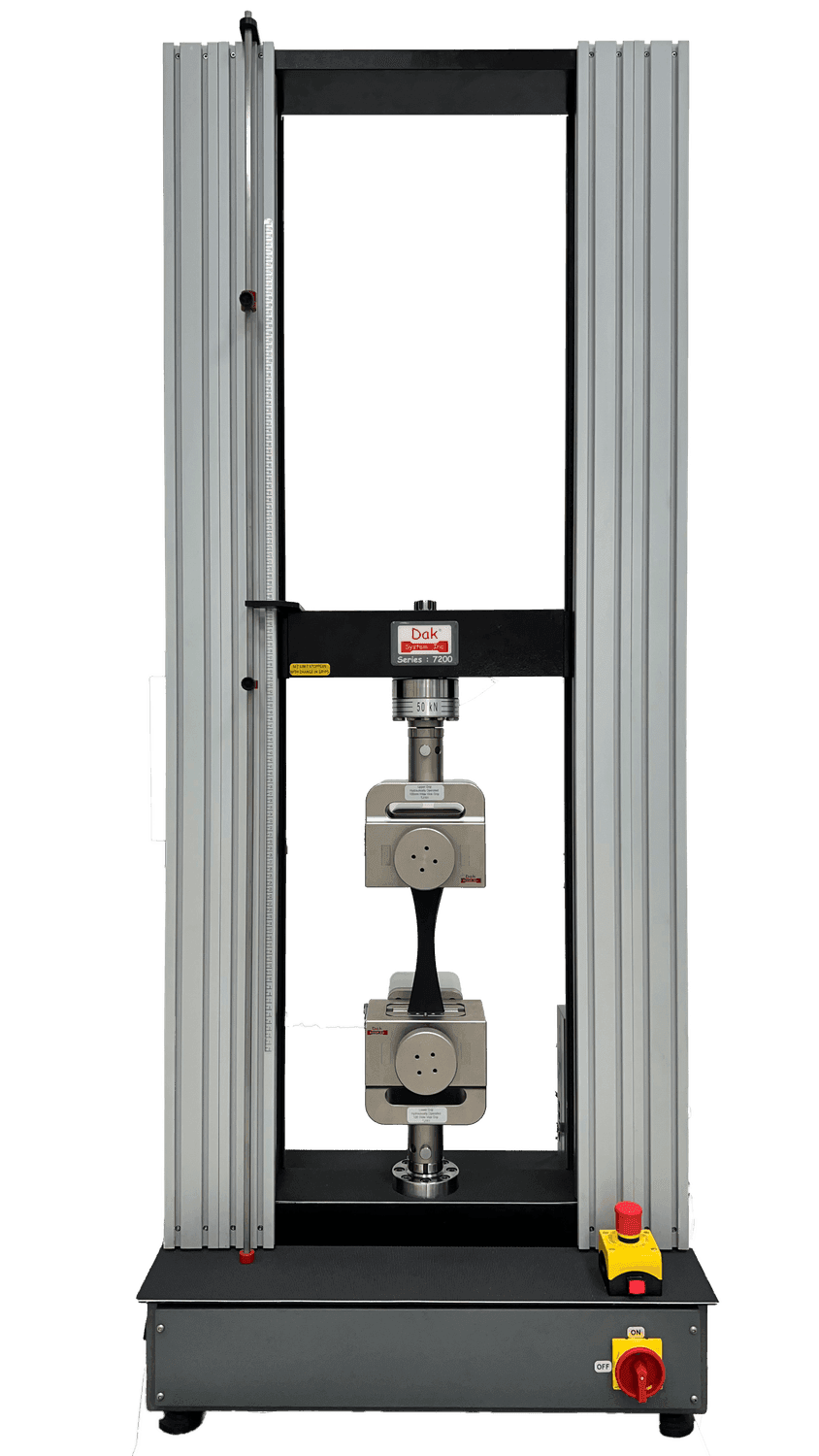
Flagship platform
DAK’s flagship platform combines flexible test programming, precise specimen setup and measurement with analysis and reporting. Explore Series 7200 for belt-development programmes, demanding quality control and tests that require programmed loading sequences.
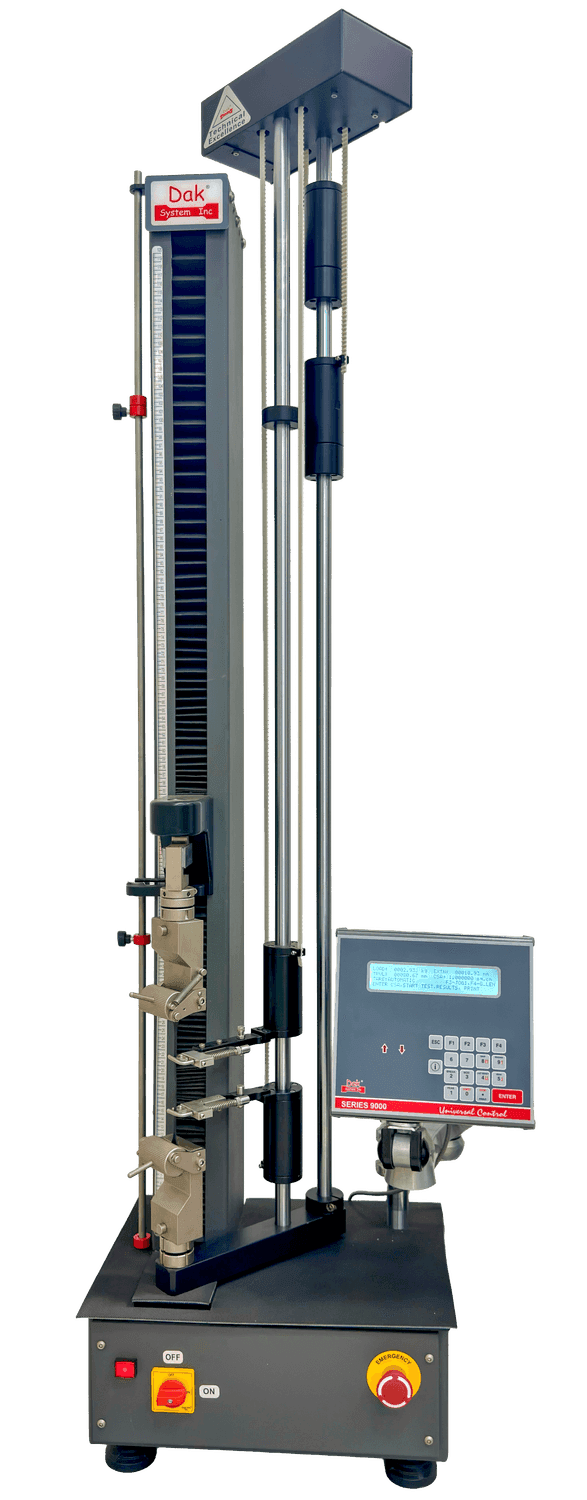
Established laboratory methods
Travel-controlled testing with standalone Console operation or a PC-connected workflow. Explore Series 9000 for established tensile and adhesion methods, with the specimen, working range and measurement specified for the application.
The Series 7200 video library includes a conveyor-belt testing demonstration. Open the library and choose the conveyor-belt application to see the existing DAK demonstration.
| Testing question | Plan the specimen and result | Explore the method |
|---|---|---|
| Full-thickness strength and elongation | For textile-carcass belts, connect the longitudinal tensile-strength requirement to the specified elongation measurements. Record the belt construction, specimen width and thickness, reference load and gauge-length requirements. | |
| Ply-to-ply and cover adhesion | Identify the interface you need to separate: one textile ply from another, or a cover from the carcass. Choose the applicable peel method and specimen preparation so the force trace represents the intended bond. | |
| Steel-cord belt properties | Cord tensile strength, cord-to-coating bond and cover-to-core adhesion are separate measurements. Identify the required interface or reinforcement test before selecting how the specimen is held and loaded. | |
| Resistance to tear propagation | For textile conveyor belts, define whether the full thickness or carcass is being evaluated and how the initial tear is prepared. Tear propagation assesses a different failure process from an uncut tensile specimen. | |
| Mechanical fastening strength | Specify the belt construction, fastener and prepared joint. ISO 1120 addresses static mechanical-fastening strength; vulcanised splice evaluation needs its own specimen and loading plan. | |
| Elastic and permanent elongation | For a repeated-load programme, define the loading sequence and the extension results to be reported. ISO 9856 addresses elastic and permanent elongation and elastic modulus; this is a different question from measuring only the breaking load. |
For textile-carcass belts, connect the longitudinal tensile-strength requirement to the specified elongation measurements. Record the belt construction, specimen width and thickness, reference load and gauge-length requirements.
Identify the interface you need to separate: one textile ply from another, or a cover from the carcass. Choose the applicable peel method and specimen preparation so the force trace represents the intended bond.
Cord tensile strength, cord-to-coating bond and cover-to-core adhesion are separate measurements. Identify the required interface or reinforcement test before selecting how the specimen is held and loaded.
For textile conveyor belts, define whether the full thickness or carcass is being evaluated and how the initial tear is prepared. Tear propagation assesses a different failure process from an uncut tensile specimen.
Specify the belt construction, fastener and prepared joint. ISO 1120 addresses static mechanical-fastening strength; vulcanised splice evaluation needs its own specimen and loading plan.
For a repeated-load programme, define the loading sequence and the extension results to be reported. ISO 9856 addresses elastic and permanent elongation and elastic modulus; this is a different question from measuring only the breaking load.
Start with the belt construction and applicable method. Textile-carcass, steel-cord and light conveyor belts have different test requirements; the linked guides help you select the appropriate route.
A full-thickness belt strip and a prepared rubber specimen do not need the same holding arrangement. Include specimen width, thickness, surface and expected load when specifying the grips.
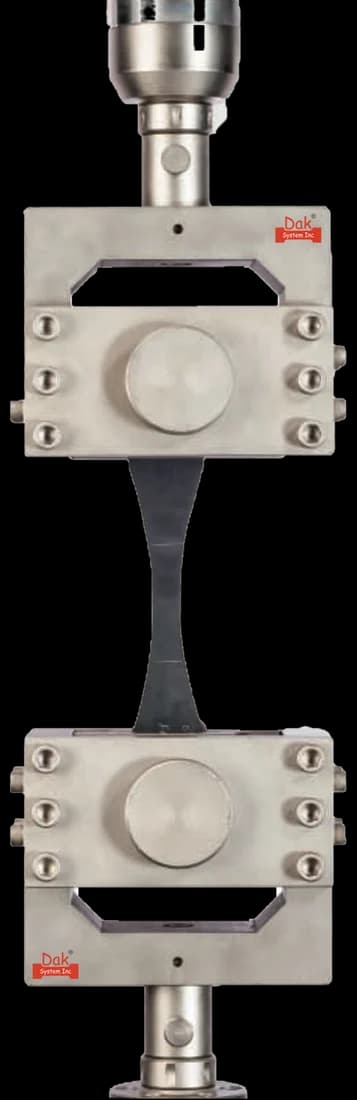
DAK’s Heavy Duty Hydraulic Grips accommodate specimens up to 200 mm wide and loads up to 200 kN. Their square-housing hydraulic wedge arrangement is designed for heavy-duty belts and geo-fabrics.
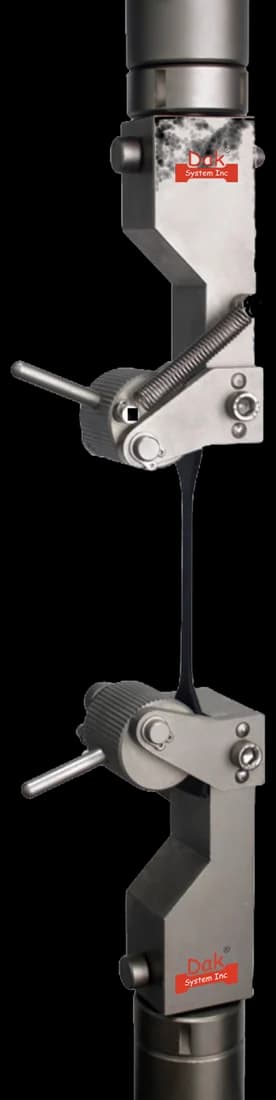
Eccentric Roller Grips use a serrated roller and flat back plate for sheet materials, polymers and some rubbers. Choose between the published sizes around the prepared specimen’s width and thickness.
For peel strips, steel cords and fastening specimens, select the holding geometry around the test. Match the load cell to the working forces and choose how extension will be measured over the specimen’s gauge length, allowing for the expected travel and behaviour at break.
Relate tensile and tear properties of prepared rubber specimens to the material-development programme. Where cure behaviour or compound processing is also part of the work, explore DAK’s rheology systems alongside the mechanical testing setup.
For wear linings and bonded components used in material handling, define the substrates, bond geometry, conditioning and loading direction. Select a joint test that measures the interface of interest.
Follow textile and metal reinforcement into their dedicated material-testing guides. For geotextiles and geogrids used in mine infrastructure, use the construction-material route to connect the specimen to the relevant test.
Record the belt designation, carcass or cord construction, cover details, batch or roll identity, sampling position and test direction. Keep conditioning and any ageing treatment with the test record so comparisons refer to the same preparation.
Distinguish breaking force, strength normalised to the specified geometry, extension at a reference load, permanent extension and adhesion results. Dyna Desk – Test Bench supports saved methods, graphing and reports with spreadsheet, PDF and CSV exports.
Include throughput, specimen changeover, available space, installation location, training and calibration needs. If the belt specification also requires flame, abrasion or other specialised tests, list them separately from the mechanical test programme.
Use these starting points, then search the complete mining and bulk-handling library by designation, material or test type. The separate conveyor-belt library provides a wider belt-specific view.
Standard test methods for rubber (elastomeric) conveyor and transmission belting — tension testing.
Grab breaking load and elongation of geotextiles.
Tensile properties of geogrids by single- or multi-rib method.
Coated fabrics — breaking strength, tear, adhesion of coating, puncture.
Textile carcass conveyor belts for bulk materials — grades and mechanical acceptance values (tested per ISO 283 / ISO 252).
Steel cord conveyor belts — dimensions and requirements.
Indian Standard — general-purpose rubber conveyor belts; tensile, elongation and adhesion requirements.
Conveyor belts — determination of strength of mechanical fastenings (static test).
Hoisting tackle breaking-load verification (large-capacity frames).
Conveyor belts — adhesion between constitutive elements (ply-to-ply and cover-to-ply, tested as peel on UTM).
Textile conveyor belts — full-thickness tensile strength, elongation at break and elongation at reference load.
Note: safety/flammability tests are companion tests outside the UTM scope.
Conveyor belts — method for determination of tear propagation resistance of textile belts.
Steel cord belts — cord tensile, cord-to-rubber adhesion and splice strength.
Steel cord conveyor belts — cord-to-coating adhesion test (initial and after thermal treatment).
Steel cord conveyor belts — adhesion strength test of the cover to the core layer.
Adhesion of rubber to rigid substrate — 90° peel and tension methods.
Conveyor belts — determination of elastic and permanent elongation and calculation of elastic modulus (cyclic loading).
Showing 1–8 of 18 standards
Share your testing requirements with DAK so the quotation can cover the machine, specimen holding, measurement and reporting as one setup.