Testing standard

ISO 11644

Leather — Test for adhesion of finish

Written and technically reviewed by Dak System Inc. engineeringLast reviewed

ISO 11644 measures the adhesion of the finish to leather, or the adhesion between two adjacent layers of the finish. A strip of the finished side is bonded to a hard plate and peeled at about 90 degrees, and the force is the adhesion value.

At a glance

Test type
Peel & adhesiona bonded joint is pulled apart
Published by
ISO
Edition
ISO 11644:2022

What the test does

A strip of finished leather is conditioned and its finished side bonded to a hard adherent plate with an adhesive chosen not to penetrate the finish. Once that mounting adhesive has cured, the separation is started at one end and the leather and the plate are peeled apart at about 90 degrees at a constant rate. The mean force over the steady portion is divided by the specimen width to give the adhesion, and where the separation actually ran — between finish and leather, between two finish layers, or into the leather itself — is identified and reported with it.

What it measures, and why it matters

Whether the finish stays on, which is a property entirely independent of how strong the leather is and is the one a customer notices first. A hide can pass ISO 3376 for tensile strength and ISO 3377-2 for tear and still have a finish that lifts at a crease, rubs off at a seam or peels from a car seat bolster in service. Nothing in a strength test warns of it. The method also covers adhesion between two adjacent layers within a finish system, which is where multi-coat finishes usually let go.

What it does not apply to

The scope exclusions are specific and worth reading before cutting specimens.

Measures
Finish-to-leather adhesion, or between two finish layers
Applies to
Finished flexible leathers with a smooth surfaceThe surface has to be bondable to a plate without the adhesive soaking into the finish.
Does NOT apply to
Unpigmented articles, or those without a continuous coatingNubuck, aniline, pull-up, suede and perforated leathers are named exclusions.
Geometry
Peeled at about 90 degrees from a bonded plate
Adhesive to the plate
Must not penetrate into the finishIf it soaks in, it reinforces the very layer being tested and the result is meaningless.
Check the plate bond survived
On every specimenDakIf the plate came away instead, the measurement was of the mounting adhesive.

This is the failure mode a leather tensile or tear test cannot see. A hide can be strong and its finish can still lift, and a lifting finish is what a customer notices first.

Test speed

Rate
A constant rate of separation as specified
Reported
Adhesion as a force per unit width
Failure locus
Between finish and leather, between finish layers, or in the leather itselfThree different findings, and only the first two are finish adhesion.
Record which layer separated
Dak

Calculations

Adhesion of finish

Mean separation force divided by the specimen width

Force per unit width. State the width convention, as with every peel result.

Why penetration invalidates it

Adhesive in the finish stiffens and reinforces the layer under test

The mounting adhesive has to stay on top of the finish. Once it is inside it, the specimen is a different material.

How the test runs

  1. 01Confirm the leather is finished, flexible and smooth-surfaced.
  2. 02Check it is not nubuck, aniline, pull-up, suede or perforated — those are excluded.
  3. 03Condition the samples as specified.
  4. 04Cut strips of the specified width.
  5. 05Bond the finished side to a hard adherent plate with an adhesive that will not penetrate the finish.
  6. 06Allow the mounting adhesive to cure fully.
  7. 07Start the separation at one end to a consistent length.
  8. 08Grip the leather and the plate and peel at about 90 degrees.
  9. 09Average the force over the steady portion.
  10. 10Identify where the separation ran — finish to leather, between finish layers, or into the leather.
  11. 11Report the locus with the value, and confirm the plate bond held.

The fixture this method needs

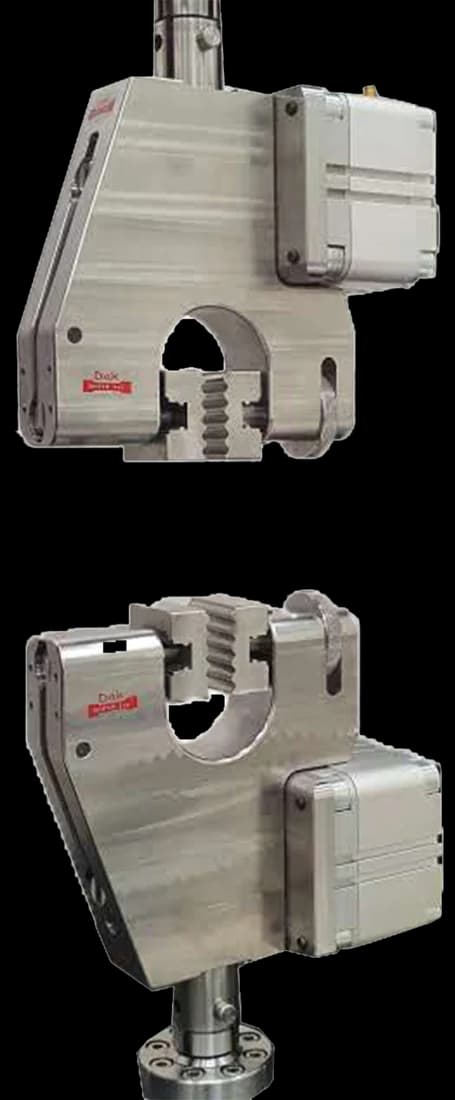
Pneumatic vice action grips with 25 mm square jaw faces
Standard 25 mm

Pneumatic Vice Action Grip

Pneumatic vice action grips hold each arm of the T at a constant pressure through a long peel, which a screw grip does not — a peel test runs for hundreds of millimetres and a slipping grip corrupts the whole trace.

Specifications

What the report has to contain

  • Reference to ISO 11644 and the edition
  • Leather type, tannage and finish system
  • Confirmation that the article is within scope
  • Conditioning atmosphere
  • Plate material and the mounting adhesive used
  • Strip width and the width convention
  • Rate of separation
  • Mean adhesion force per unit width
  • Where the separation occurred
  • Any specimen where the plate bond failed first

What the machine must be capable of

Very low forces and long, steady travel. Finish adhesion is commonly a few newtons per unit width, so the load cell is chosen for that rather than for the frame. Grips must hold a thin leather strip and a rigid plate without damaging either, and the plate needs supporting so the angle stays near 90 degrees as the peel front advances rather than drifting as the strip is drawn off.

What goes wrong in practice

The mounting bond failing before the finish does, which measures the wrong adhesive entirely — the direct analogue of the intermediate-strip problem in ISO 2411, and checked the same way, by confirming on every specimen that the plate bond held. Adhesive penetrating into the finish. Running the method on an excluded leather because it was the material to hand. Reporting a force without saying where the separation ran, when one of the three possible loci is not a finish adhesion result at all. And omitting the width convention, which leaves a figure that could plausibly be read at either of the two scales in common use across peel standards.

ISO 11644 or ISO 2411

ISO 11644 — leatherISO 2411 — coated fabric
SubstrateFinished leatherWoven base fabric
QuestionDoes the finish stay on?Does the coating stay on?
MethodBond to a plate, peelSeparate the coating and peel
Shared riskThe mounting bond failing firstThe intermediate strip failing first

Two industries with the same problem — a surface layer that has to stay attached — and the same trap, that the auxiliary bond used to grip the layer can fail before the layer does.

Questions we are asked about this test

What is ISO 11644?

It is the ISO test for the adhesion of a finish to leather, or between two adjacent layers of a finish. A strip of the finished side is bonded to a hard plate and peeled at about 90 degrees, and the force required is the adhesion value. The current edition is ISO 11644:2022, the third, published in October 2022.

Which leathers are excluded?

Unpigmented articles and those without a continuous coating layer — the standard names nubuck, aniline, pull-up, suede and perforated leathers. The reason is practical: the method needs a smooth surface that can be bonded to a plate without the adhesive soaking in, and none of those provides one. Running it on them produces a number that describes the mounting adhesive rather than the finish.

Why does adhesive penetration matter so much?

Because if the mounting adhesive soaks into the finish, it stiffens and reinforces the very layer being tested. The specimen is then a different material from the product, and the measured adhesion is higher than the finish would ever achieve on its own. The adhesive has to sit on top of the finish, which is why the method restricts itself to smooth, continuously coated surfaces.

What if the plate comes away instead?

The result is void — it measured the mounting adhesive rather than the finish. This is the direct analogue of the intermediate-strip problem in ISO 2411 for coated fabrics: whenever an auxiliary bond is used to get hold of a layer, that bond has to outlast the one under test, and checking it did is part of validating each specimen.

Why does the failure locus matter?

Because there are three possible ones and only two of them are finish adhesion. The separation can run between the finish and the leather, between two layers within the finish, or into the leather itself. The third means the finish was better attached than the corium beneath it — a legitimate finding, but not an adhesion value, and it should be reported as what it is.

Why test finish adhesion at all if the leather is strong?

Because they are unrelated properties and the customer sees the finish. A hide can pass ISO 3376 for tensile strength and ISO 3377-2 for tear and still have a finish that lifts at a crease, rubs off at a seam or peels from a car seat bolster. Nothing in a strength test gives any warning of it, which is why finish adhesion is specified separately.

What are the units?

Force per unit width, and as with every peel result the width convention has to be stated. Newtons per millimetre and force per some larger stated width are both in circulation across peel standards, and a figure quoted without saying which is a number that could be either.

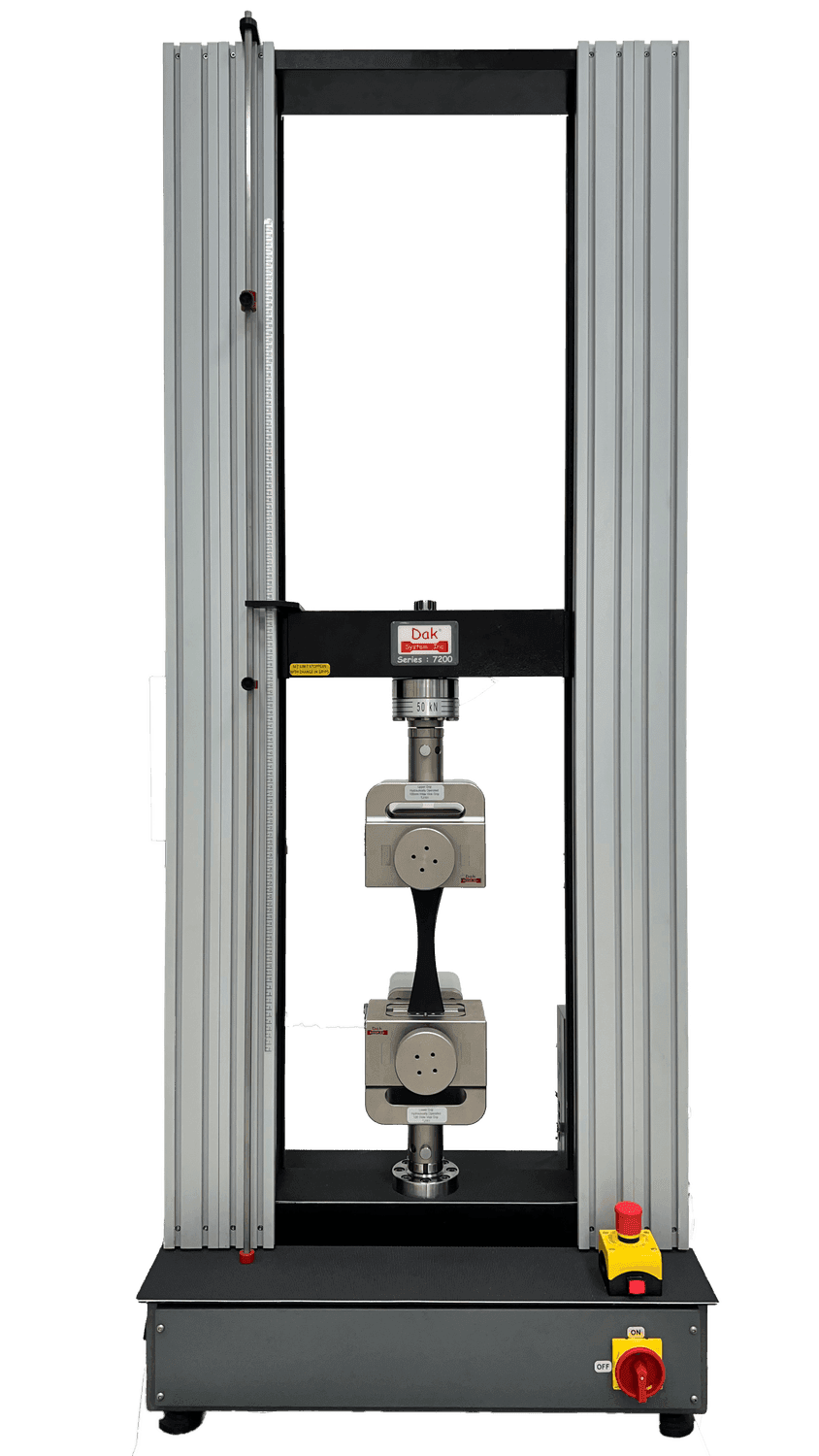
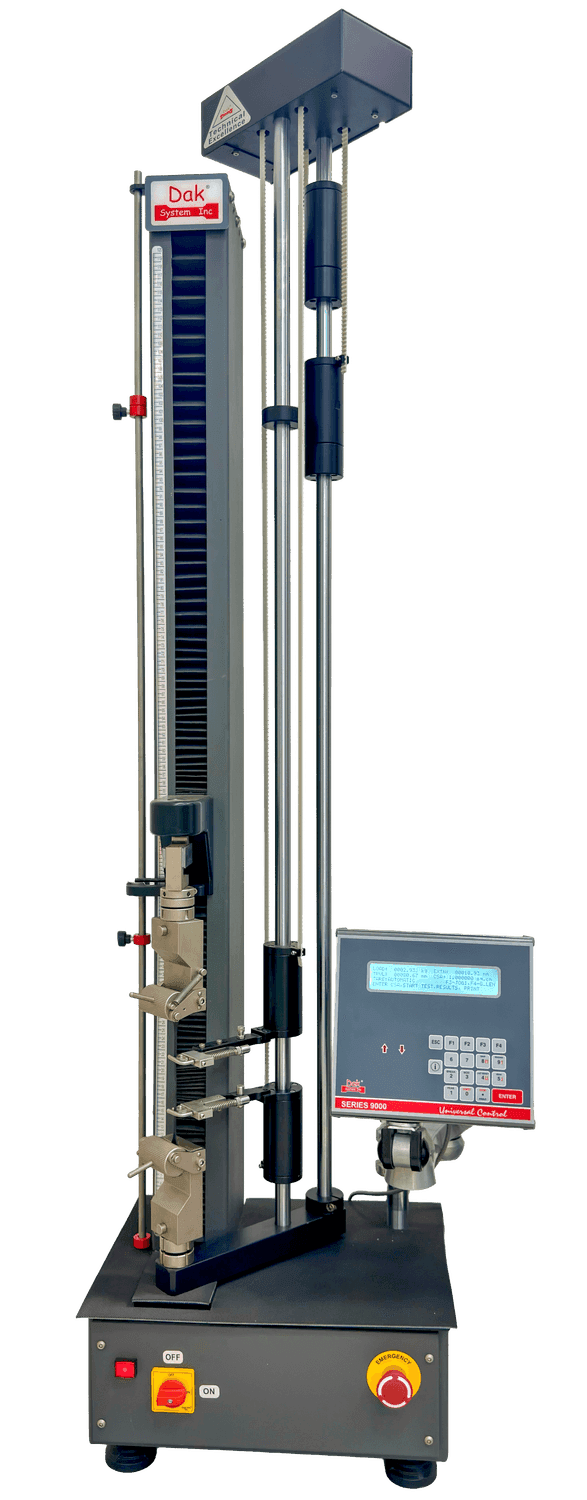
Running ISO 11644 on the Series 7200 and Series 9000

Dak verifies against whichever standard the method names, and where a class applies our frames sit a class tighter than it asks.

The method asks forDak supplies
CapacityVery low — finish adhesion is commonly a few newtons per unit widthLoad cells from 1 kg to 60 ton on the Series 7200, and 0.5 to 100 kN on the Series 9000
Force accuracyClass 1 at the actual working loadISO 7500-1 Class 0.5, verified to ASTM E4, DIN 51221 and BS 1610
GrippingA hard adherent plate bonded to the finished surface, peeled at about 90 degreesOur peel and adhesion fixtures, built to the specimen
Environment23 ± 2 °C standard laboratory atmosphere3009 series chambers, −150 °C to +400 °C — temperature only

This page describes the method as practised. The governing text is the current edition from the issuing body. Tell us what you are testing and we will answer with the machine, the fixture and a quotation.

Materials tested to it

The test it standardises

Other standards explained