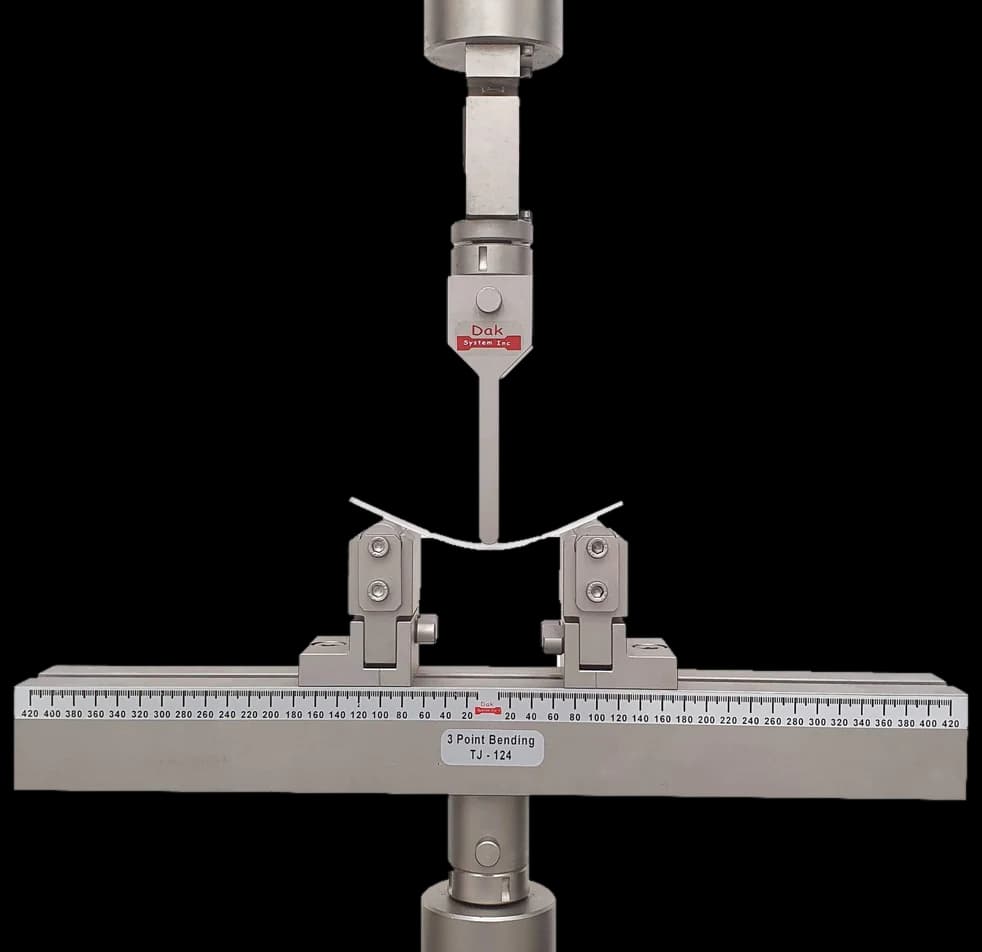
- Time to maximum load
- About 10 min; not less than 6 nor more than 20 for flexure, 5 to 20 for the other proceduresThe time window is the requirement. The rates below are what usually land inside it.
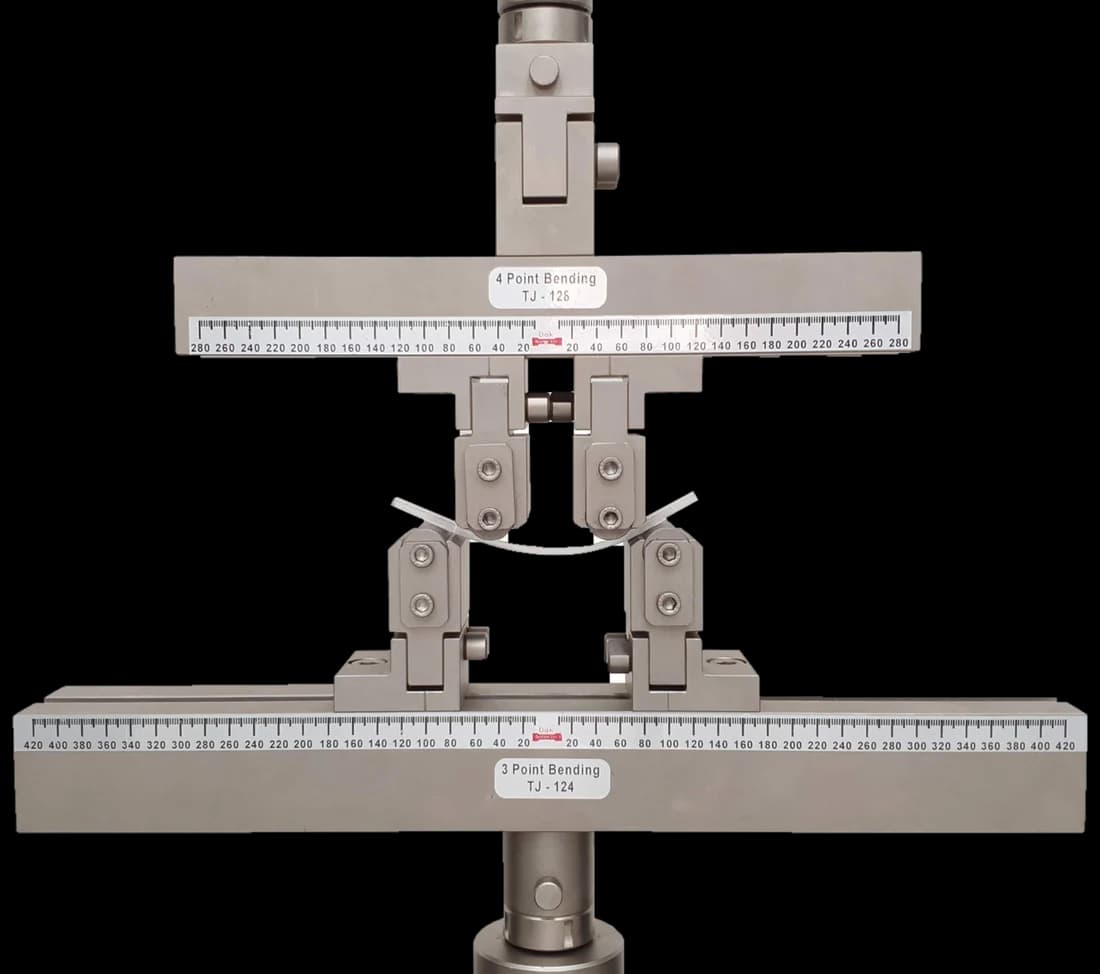
- Flexure
- Outer-fibre strain rate of 0.001 mm/mm per minuteHead speed under two symmetrical loads: N = z a (3L − 4a) / 3h, where a is the shear span, L the span and h the depth.
- Worked through
- About 11 mm/min on a 38 × 235 mm joist over a 3.8 m span at third pointsDaka = 1267 mm, a/h = 5.4, inside the 5:1 to 12:1 band the method wants for flexural work. Re-do it for your own span and depth.
- Compression, parallel or perpendicular
- Fibre strain 0.001 mm/mm per minute ± 25 %
- Tension parallel
- Fibre strain 0.0006 mm/mm per minute ± 25 %
- Torsion
- Angular detrusion about 0.16 radian per metre of length per minute ± 50 %
- Which edition
- Rates published identically in D198-99 and D198-02e1PracticeConfirm against D198-22 before a report cites them; the current text is not readable outside the purchased standard.
- Reported
- Modulus of rupture and modulus of elasticity for flexure; the analogous quantities for the other procedures
- Deflection
- Measured on the memberSupport settlement and bearing indentation are a large share of crosshead travel on a long timber span.
- Record moisture content and section dimensions
- On every memberDakTimber strength moves substantially with moisture, and the section is rarely exactly nominal.