What is ISO 23910?+
ISO 23910 specifies a method for determining the stitch tear resistance of leather. A slit is cut in a test piece, a metal mandrel is passed through it, and the leather is torn off the mandrel while the maximum force is recorded in newtons. The current edition is ISO 23910:2019, the third, which also carries the designation IULTCS/IUP 44.
What does stitch tear resistance actually predict?+
Whether a seam will unzip. When a stitched seam is loaded, each stitch bears on the leather between its hole and the edge. If that leather gives way the thread is still intact and the stitching is still sound, but the seam opens as the tear runs from hole to hole. Tensile strength does not predict this and neither does tear load, because both are measured on material away from a concentrated bearing point.
Why can the slit not be tidied up with a knife?+
Because the tip of the slit is where the tear starts, and its geometry sets the force. The press knife cuts the outline and the slit in one operation with all its cutting edges in the same plane, giving an identical slit every time. The standard states that a subsequent cut with a knife or similar tool is not permitted. A hand-finished slit has a different tip radius and a different local damage state, and it tears at a different force.
Why are the two directions reported separately?+
Because leather is not isotropic. Its fibre structure runs with the backbone, so a piece cut parallel to the backbone and one cut perpendicular to it do not tear at the same load. The method takes three pieces in each direction and requires the mean for each direction in the report. The average of the two is reported only if the customer or the specification asks for it.
How thick a leather does it suit?+
It can be used on all leathers, and is particularly suitable for leathers over 1,2 mm in thickness. That is where the property drives design decisions — upholstery, footwear uppers and heavy goods, all of which are stitched through material thick enough for the stitch to bear on a real depth of leather.
Why is the result a force rather than a stress?+
Because the loaded area is not a defined cross-section. The mandrel bears on the slit over a contact that changes as the tear runs, so a stress computed from thickness times some assumed width would be a number without a defined geometry behind it. The method records the maximum force in newtons, reports the directional means to the nearest 0,1 N, and requires the thickness to be reported alongside, so the reader can interpret one against the other.
What machine does it need?+
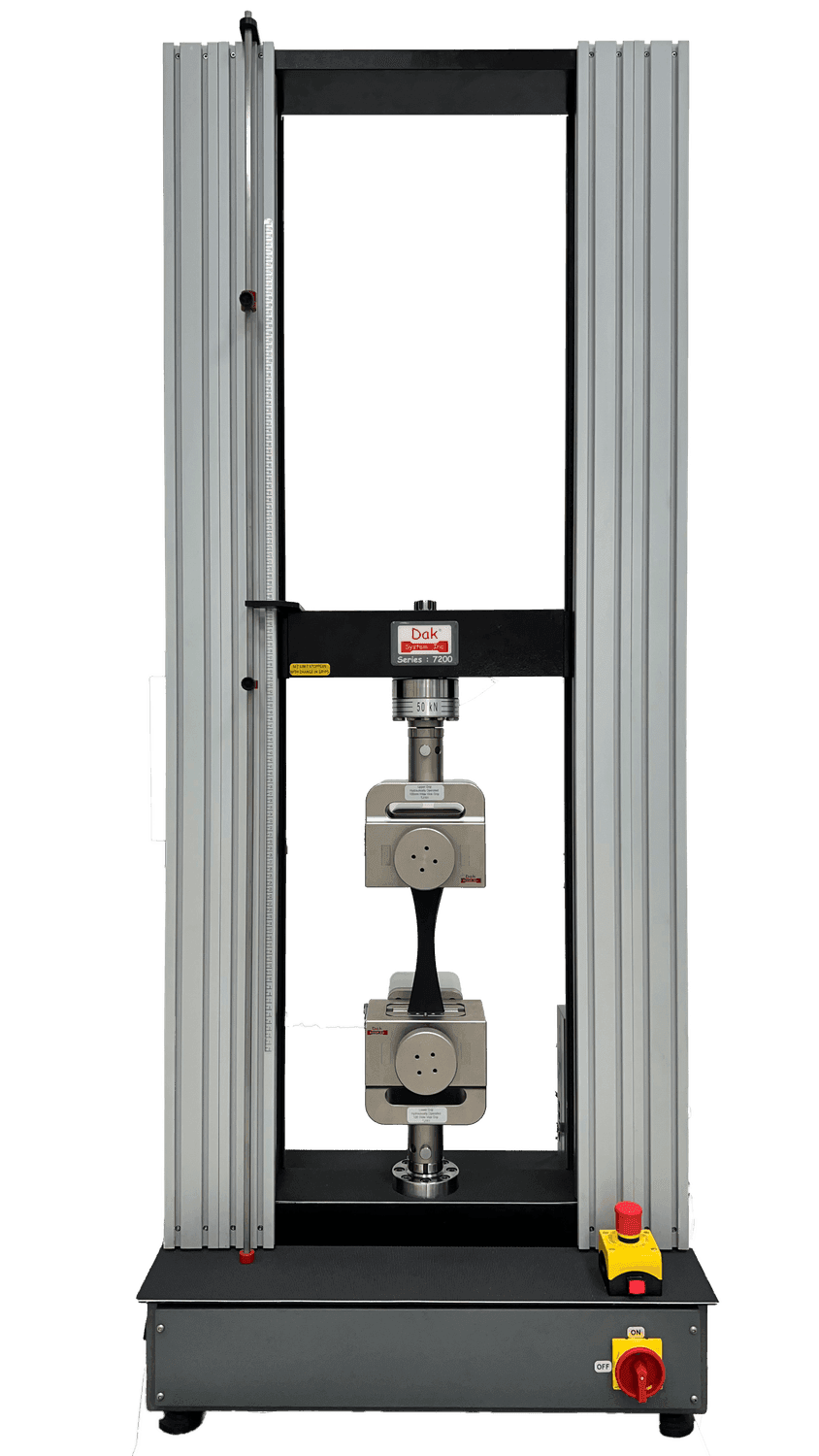
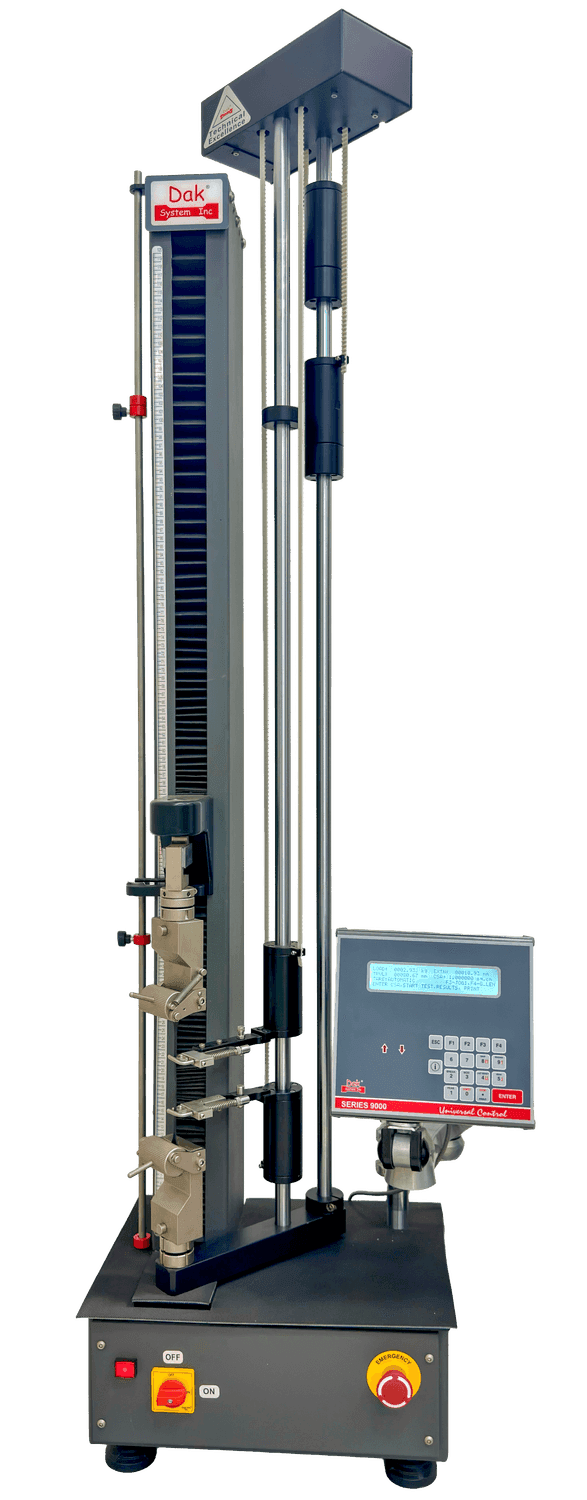
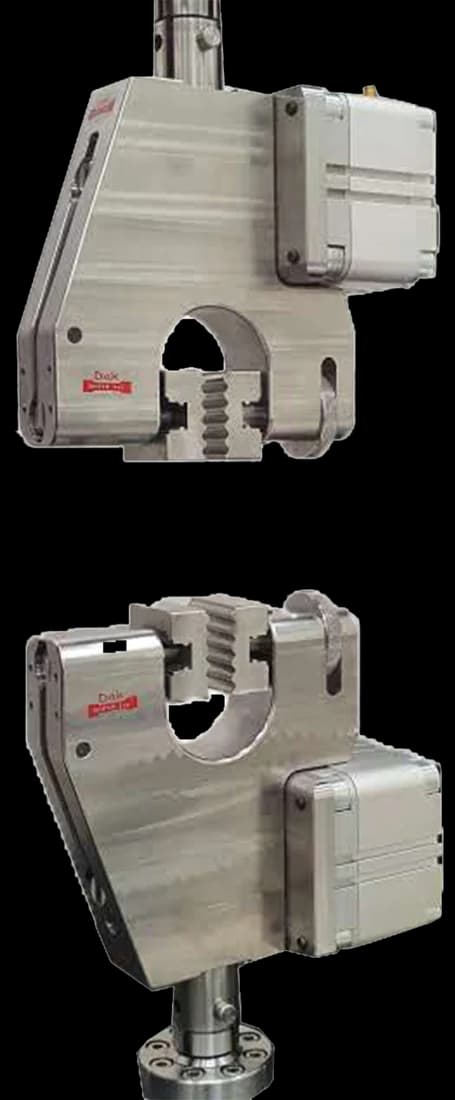
A tensile frame with a force range appropriate to the specimen, force measurement to class 2 of ISO 7500-1:2018, and a uniform jaw separation speed of 100 mm/min ± 20 mm/min. The jaws must be at least 25 mm long in the direction of the applied load and apply constant clamping by mechanical or pneumatic means, with faces textured so that the specimen does not slip at the maximum load reached in the test.
What changed between the 2017 and 2019 editions?+
Very little, and only in one place. The third edition cancels and replaces ISO 23910:2017, which the ISO catalogue now records as withdrawn, and the stated change is that the wording of the sampling and conditioning clauses was modified to remove a possible misunderstanding about how samples are conditioned. The apparatus, the test piece and the procedure are unchanged.