Testing standard

ISO 9073-18

Nonwovens — Test methods — Part 18: Determination of tensile strength and elongation at break using the grab tensile test

Written and technically reviewed by Dak System Inc. engineeringLast reviewed

ISO 9073-18 determines the tensile strength and elongation at break of nonwovens by the grab method: only the centre of the specimen is clamped, over an area of 25,0 mm ± 0,5 mm square, and the surrounding fabric contributes to the strength recorded. The current edition is ISO 9073-18:2023, which replaced the withdrawn 2007 edition.

At a glance

Test type
Tensilethe specimen is pulled apart
Published by
ISO
Edition
ISO 9073-18:2023

What the test does

Only the middle of the specimen is clamped. A wide piece of nonwoven is gripped over a clamping area of 25,0 mm ± 0,5 mm square at the centre of its width, extended at a constant rate until it ruptures, and the maximum force is recorded together with the elongation at that point. The fabric either side of the jaws is unclamped but still attached, so it feeds load into the gripped section as the test runs. That is exactly what the method sets out to capture — its own definition calls it effective strength, the strength of the fibres in a specific width plus the additional strength contributed by the fibres beside them. Specimens are tested conditioned, wet, or both.

What it measures, and why it matters

How a nonwoven behaves when a load is applied to part of it rather than to all of it, which is how these materials nearly always fail in service. A wipe is pulled at one corner, a hygiene product is stressed over a fastening, a medical drape catches on an instrument. A strip test loads every fibre in the section at once and answers a different question. Because the surrounding fabric contributes, the grab result is not a strip result scaled by width, and the two are not convertible in either direction — a specification names one method, and a report that does not say which was used cannot be compared with anything.

Specimen and clamping area

The clamped area is the defining dimension of a grab test, not the width of the piece that was cut.

Clamping area
25,0 mm ± 0,5 mm × 25,0 mm ± 0,5 mm
Clamp arrangement
One clamp 25 mm × 40 mm minimum, preferably 50 mm, with the second either the same rotated 90° or 25 mm × 25 mmEither arrangement gives the same 25 mm square clamped area on the fabric.
Not applicable to
Materials with a high percentage of stretch
States
Conditioned or wetWet specimens are prepared with grade 3 water to ISO 3696 and a non-ionic wetting agent; two sheets of blotting paper are needed.
Directions
Machine and cross-machine, cut and reported separatelyPracticeA web is laid on a moving belt, so the process orients the fibres. Averaging the two directions describes neither.
Sampling
To ISO 186, from areas with no visible flaws and no creasesWhere the customer specification gives no plan, ISO 2859-1 or ISO 3951-1 are used — and the standard notes those are not valid sampling plans by themselves.
Cut with a sharp die or template
DakA nonwoven has no yarns to carry load around a damaged edge, so a ragged cut is a notch rather than a rough edge.

A grab result belongs to the clamping geometry that produced it. Changing the jaw faces changes how much surrounding fabric helps, and therefore changes the number.

Test speed and machine type

Rate of extension
300 mm/min, uncertainty of measurement ±10 %
Machine type
Constant rate of extension (CRE) is the preferred machineConstant rate of loading instruments are covered for information only, by reference to ISO 2062:2009 Annex A, and may be used by agreement.
Comparing machine types
Not applicable — results from machines working on different principles are not comparableWhere different types must be compared, a constant time to break of 20 s ± 3 s is the established approach, and even then the data can differ significantly.
Data acquisition
At least 8 readings per second where force is captured by software
Reject jaw breaks and slippage, and record how many
DakThe method carries separate clauses for slippage and jaw breaks. A specimen that failed at the jaw edge did not measure the fabric.

Calculations

Breaking force

The maximum force applied to the specimen carried to rupture

Reported in newtons for the stated grab geometry. Nothing is divided by an area — a nonwoven's thickness compresses under the gauge, so a stress derived from it would depend mostly on how hard the gauge pressed.

Elongation at break

The deformation in the direction of load, expressed as a percentage

extension
change in length of the specimen due to stretching, in units of length
gauge length
distance between the two effective clamping points

The effective clamping points can be checked by clamping a specimen with carbon copy paper to leave a gripping pattern on the specimen or on the jaw faces.

Why the grab value exceeds a strip value

Clamped fibres plus the contribution of the fibres beside them

The standard's own term is effective strength. It is not the strip strength scaled by width, and the two cannot be converted into each other.

How the test runs

  1. 01Sample the lot to ISO 186, avoiding visible flaws and creases.
  2. 02Cut specimens for both the machine and cross-machine directions.
  3. 03Condition them, or prepare wet specimens with grade 3 water and a non-ionic wetting agent.
  4. 04Check the clamps give a fabric clamping area of 25 mm square.
  5. 05Confirm the jaw faces are smooth, flat, parallel and centred on one another.
  6. 06Verify the machine to ISO 7500-1 and confirm the metrology to ISO 10012.
  7. 07Set the rate of extension to 300 mm/min.
  8. 08Mount the specimen with its centre in the line of applied force, square and free of pre-tension.
  9. 09Run to rupture, recording the maximum force and the elongation at break.
  10. 10Reject specimens that slipped or broke at the jaw, and record how many.
  11. 11Repeat for the other direction, and for the wet state where required.
  12. 12Report each direction separately, with the machine class if class 2 was used.

Grips and fixtures for this method

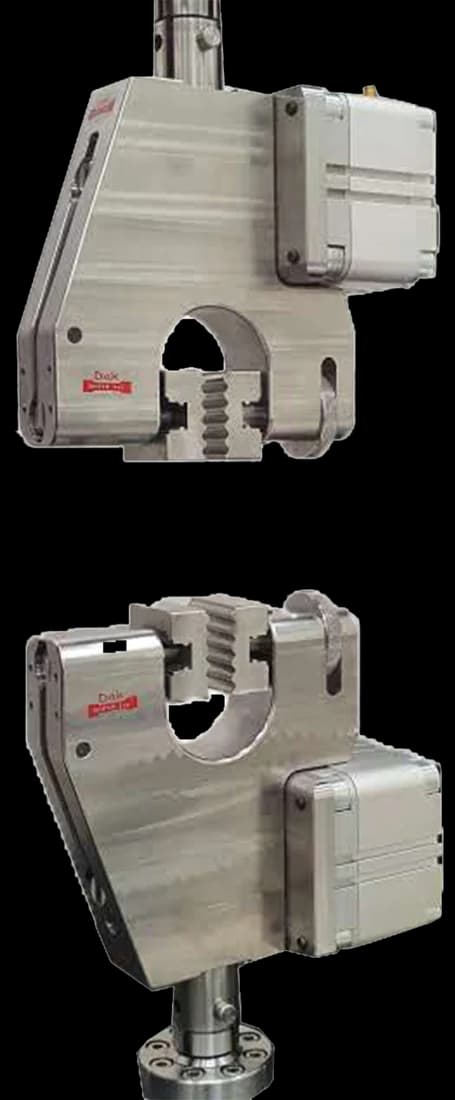
Pneumatic vice action grips with 25 mm square jaw faces
Standard 25 mm

Pneumatic Vice Action Grip

Pneumatic vice action holds the clamping pressure constant from specimen to specimen, which is what a grab test needs — the result depends on how much surrounding fabric is allowed to help, and that changes with grip force. The faces have to be sized to give a 25 mm square clamped area, with one clamp at least 25 mm × 40 mm; jaw faces are made to suit.

Specifications
Self-identifying

Load Cells

Most nonwovens break between a few newtons and a few hundred, and the method wants the indicated maximum force within ±1 % anywhere in the range used. That is a cell chosen for the fabric, not for the frame.

Specifications

What the report has to contain

  • Reference to ISO 9073-18 and the edition
  • Material identification and mass per unit area
  • Direction tested, machine or cross-machine
  • Conditioned or wet state, and how wet specimens were prepared
  • Clamping area and clamp arrangement used
  • Rate of extension
  • A statement if a class 2 machine was used rather than class 1
  • Breaking force for each specimen, in newtons
  • Elongation at break as a percentage
  • Mean and variability for each direction
  • Number of specimens rejected for slippage or jaw breaks

What the machine must be capable of

A constant-rate-of-extension frame is the preferred machine, and it must reach 300 mm/min with an uncertainty of measurement of ±10 %. Force accuracy shall be class 1 of ISO 7500-1: the error of the indicated or recorded maximum force must not exceed ±1 % anywhere in the range used, and the error of indicated jaw separation must not exceed ±1 mm. A class 2 machine may be used, but that has to be stated in the test report. Where force is captured by data acquisition, the sampling frequency must be at least eight readings per second. Metrological confirmation of the machine follows ISO 10012. Jaw faces must be smooth, flat and parallel, holding the specimen without cutting it.

What goes wrong in practice

Comparing results from machines working on different principles, which the standard rules out — even the constant time-to-break convention of 20 s ± 3 s only narrows the gap rather than closing it. Running the method on a stretchy material it excludes. Reporting a grab figure against a strip specification. Letting the specimen slip, or accepting a break at the jaw edge. Using a class 2 machine and not saying so, which quietly removes the reader's ability to judge the number. And cutting the outer piece carelessly: a nonwoven has no yarns to redistribute load around a damaged edge, so a ragged cut is simply a notch.

Grab or strip, on the same nonwoven

ISO 9073-18 (grab)ISO 9073-3 (strip)
ClampedThe centre only, 25 mm squareThe full specimen width
Surrounding fabricContributes to the resultContributes nothing — it is all clamped
Specimen width optionsSet by the clamping area25 mm (Option A) or 50 mm (Option B)
AnswersHow the web behaves when loaded over part of its widthHow much load every fibre in the section carries
Comparable with the otherNoNo

Two parts of one series covering one property by different clamping. Neither converts into the other, and a specification names one. A report that does not say which method was used cannot be compared with anything.

Questions we are asked about this test

What is ISO 9073-18?

It is Part 18 of the ISO 9073 series of nonwoven test methods, covering tensile strength and elongation at break by the grab tensile test — only the centre of the specimen is clamped, over an area of 25 mm square. The current edition is ISO 9073-18:2023, the second, published in November 2023 and replacing the withdrawn 2007 first edition.

What changed in the 2023 edition?

The title, for one thing: the 2007 edition was headed Textiles — Test methods for nonwovens — Part 18: Determination of breaking strength and elongation of nonwoven materials using the grab tensile test, and the current one reads Nonwovens — Test methods — Part 18: Determination of tensile strength and elongation at break using the grab tensile test. The scope was clarified, new terms were added, and separate clauses were introduced for sampling, conditioning, specimen preparation, apparatus verification, expression of results, and precision and bias.

How is a grab test different from a strip test?

In a strip test the full width of the specimen is clamped, so every fibre in the section carries load. In a grab test only the centre is clamped, and the unclamped fabric on either side remains attached and feeds load into the gripped section as the test runs. The standard calls the result effective strength: the strength of the fibres in a specific width plus the additional strength contributed by the fibres beside them. That is a real property of the material in use, and it is not the strip strength scaled by width.

Why does the method exclude stretchy materials?

Because the mechanism the grab test relies on breaks down. The contribution of the surrounding fabric depends on it transferring load into the clamped section; a material with a high percentage of stretch simply extends instead, the load path becomes indeterminate, and the number stops describing anything repeatable. The standard states plainly that the test method is not applicable to those materials.

What accuracy class does the machine need?

Class 1 of ISO 7500-1 under conditions of use: the error of the indicated or recorded maximum force must not exceed ±1 % at any point in the range used, and the error of indicated jaw separation must not exceed ±1 mm. A class 2 machine may be used, but the standard requires that to be stated in the test report. Where force is recorded through data acquisition boards and software, the sampling frequency must be at least eight per second.

Can a constant-rate-of-loading machine be used?

By agreement, and with a caveat. The method specifies constant rate of extension machines and names CRE as preferred. Constant rate of loading instruments are covered for information by reference to ISO 2062:2009 Annex A, in recognition that they remain in use. Results from machines operating on different principles are not comparable — even holding a constant time to break of 20 s ± 3 s, which is the established way of producing comparable data, the standard warns the results can still differ significantly.

Why test wet as well as conditioned?

Because a large share of nonwovens do their work wet — wipes, hygiene products, medical drapes, filtration media — and many lose most of their strength when saturated. Reporting only the conditioned figure would describe a property the product does not have at the moment it matters. The method specifies grade 3 water to ISO 3696 with a non-ionic wetting agent, and blotting paper for handling the wet specimens.

Does the machine direction matter?

A great deal. A nonwoven web is laid down on a moving belt and the process orients the fibres along the direction of travel, so the machine direction is commonly several times stronger than the cross direction. Both are ordinarily tested and reported separately. An average would describe neither and would let a product satisfy a specification while being weak across the web, which is the direction most tearing failures start in.

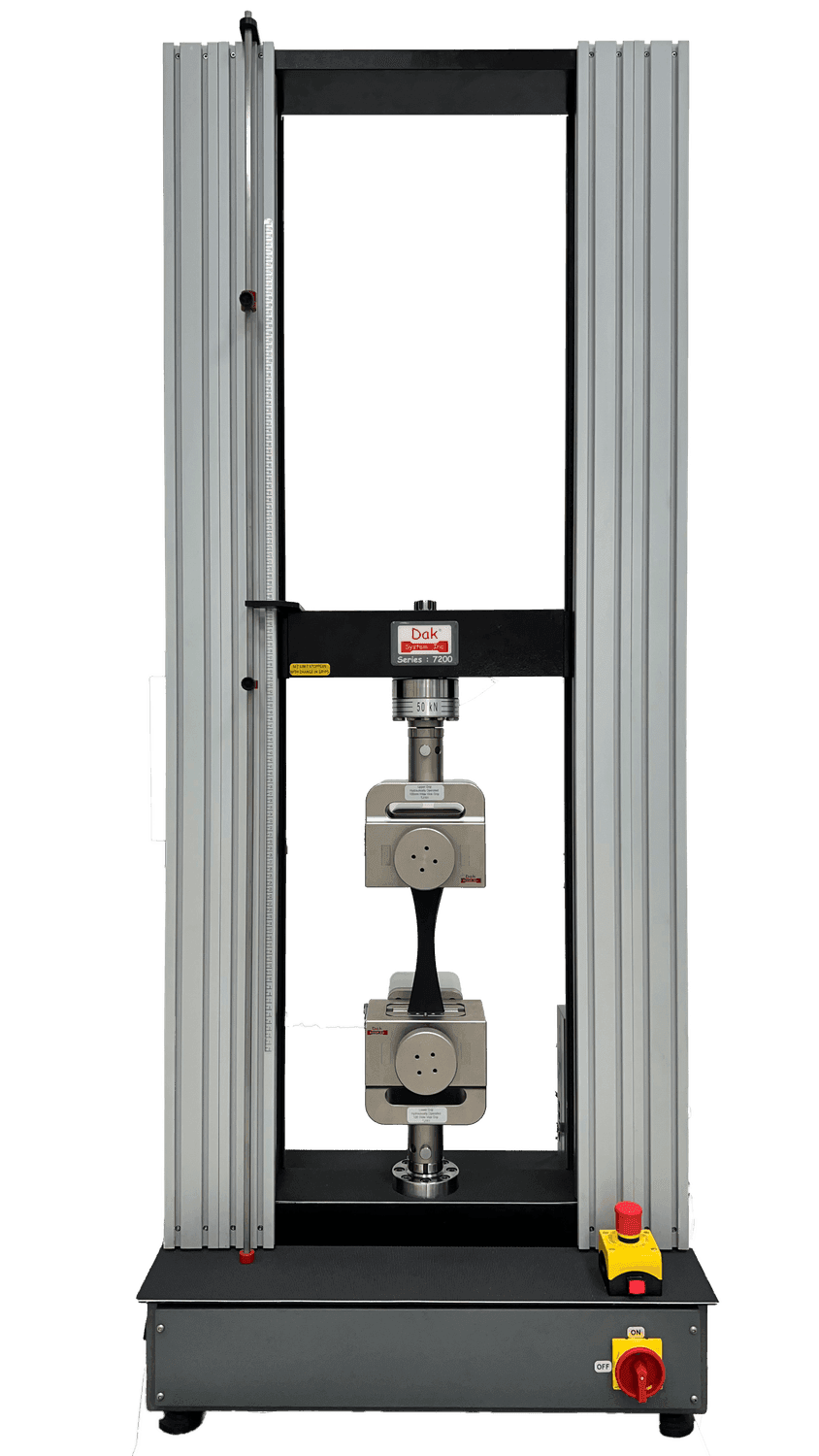
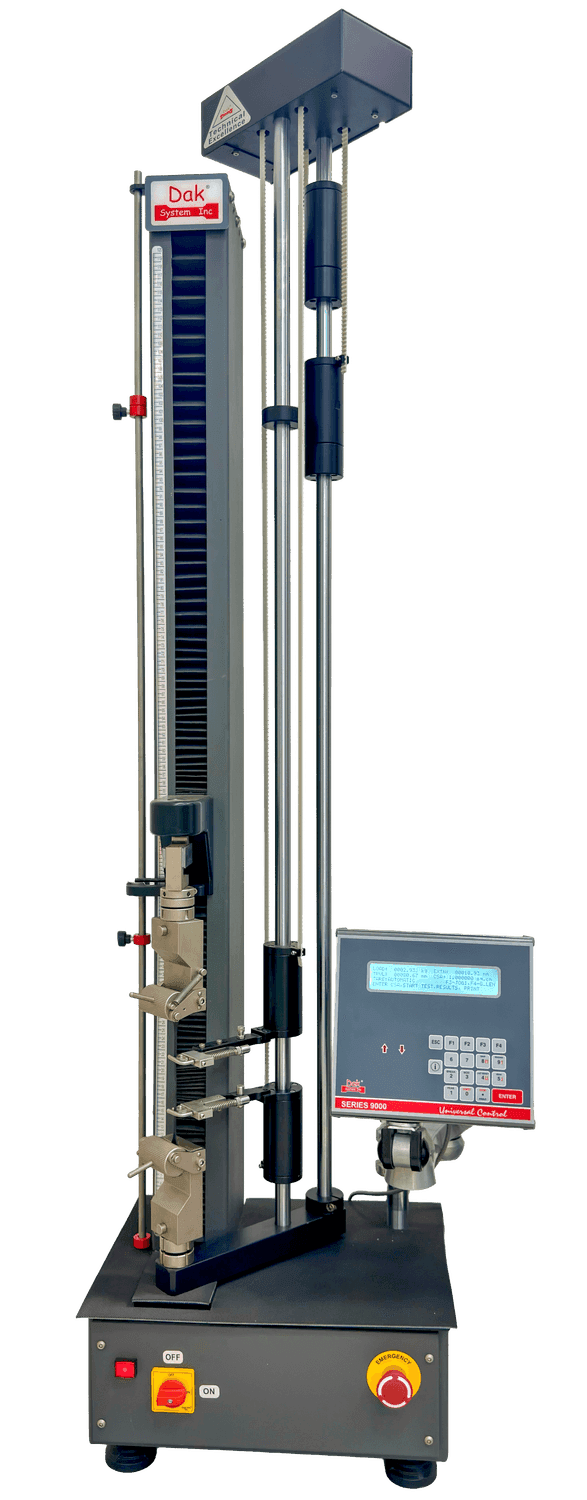
Running ISO 9073-18 on the Series 7200 and Series 9000

Dak verifies against whichever standard the method names, and where a class applies our frames sit a class tighter than it asks.

The method asks forDak supplies
CapacityLow — most nonwovens break between a few newtons and a few hundred newtons, so the cell is chosen for the fabric rather than for the frameLoad cells from 1 kg to 60 ton on the Series 7200, and 0.5 to 100 kN on the Series 9000
Force accuracyISO 7500-1 Class 1 under conditions of use; a Class 2 machine may be used if that is stated in the test reportISO 7500-1 Class 0.5 — a class tighter than the method asks
GrippingGrab clamps giving a fabric clamping area of 25,0 mm ± 0,5 mm squareWedge, vice-action, pneumatic and hydraulic grips, built to the specimen
EnvironmentConditioned in the ISO 139 atmosphere; a wet state is an explicit alternative, using grade 3 water to ISO 3696 with a non-ionic wetting agent3009 series chambers, −150 °C to +400 °C — temperature only

This page describes the method as practised. The governing text is the current edition from the issuing body. Tell us what you are testing and we will answer with the machine, the fixture and a quotation.