ASTM 52909
CompressionAM metals (powder bed fusion) — orientation and location dependence of mechanical properties; testing per ASTM E8 / ISO 6892-1 (tensile) and ASTM E9 (compression).

Turn material and process development into measurable results. DAK testing systems support tensile, compression and flexural testing of printed specimens and wider research materials, with the test method, gripping and measurement configured around your laboratory’s work.
Plan the complete test setup around your specimen range, required results and working methods. Start with the measurements you need, then choose the frame, load cells and accessories to support them.
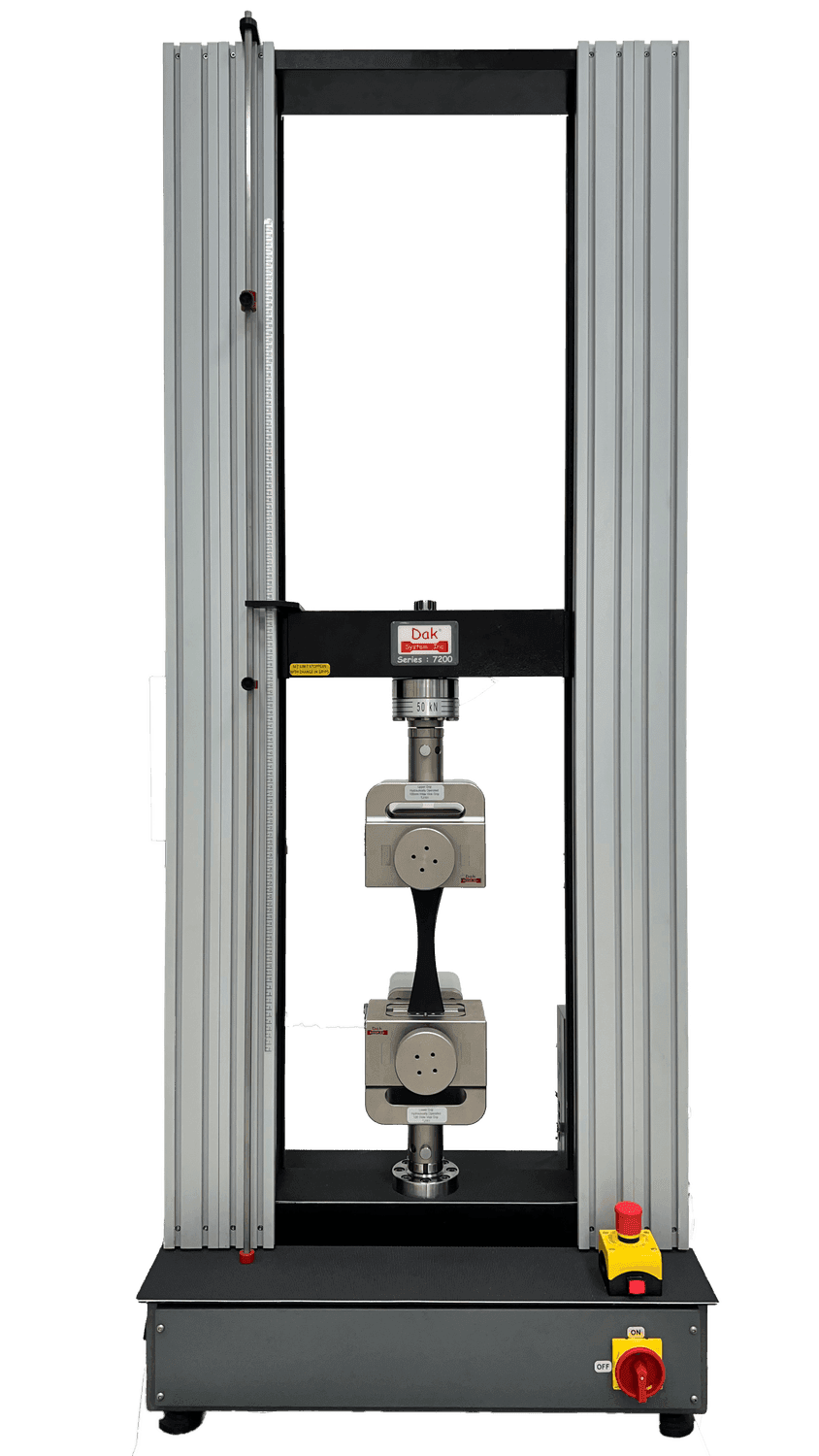
DAK’s flagship UTM
DAK’s flagship platform brings flexible test programming, specimen setup, measurement and analysis together. A strong starting point for laboratories developing methods, comparing materials and moving between research projects.
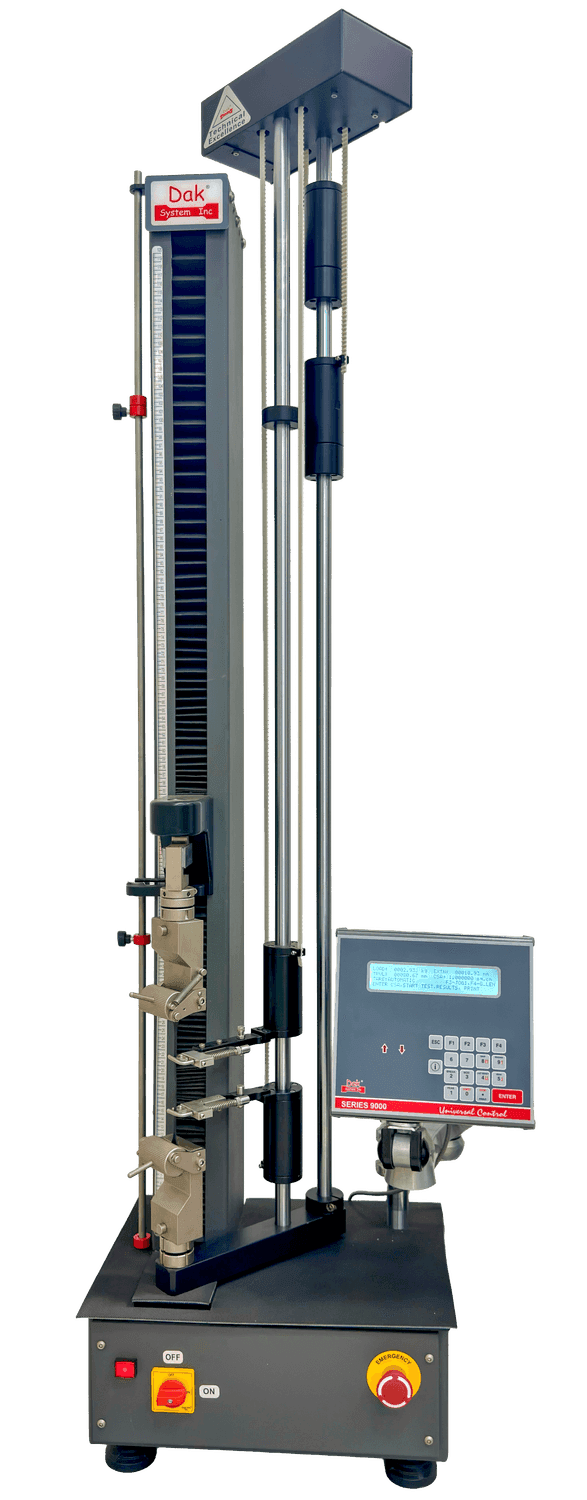
Precision for established methods
Travel-controlled testing with standalone Console operation or PC-connected analysis and reporting. A practical choice for established testing programmes, configured around the required specimen, force range and measurement.
For fatigue programmes, include the loading history, frequency, expected duration and specimen arrangement when discussing the system.
Identify the alloy, printing process and whether the specimen is printed to shape or machined from a build. Keep its build position, loading direction and post-processing condition with the test record.
For printed polymer specimens, record the material, print direction and relevant construction details alongside the selected method. Compare like-for-like specimen conditions when evaluating changes in the print process.
Define the test geometry, contact arrangement and loading method. Flexural and compression tests require different fixtures and specimen preparation, even when they concern the same material.
Shared laboratories also work with conventional metals, polymers, composites and bonded materials. Group your intended methods and specimens to identify which accessories and measurement arrangements the laboratory needs.
A strength value is most useful when the specimen and test conditions behind it are clear. Plan the comparison before testing so changes in manufacturing can be distinguished from changes in specimen preparation or measurement.
| Comparison | Information to retain | Next step |
|---|---|---|
| Build direction and location | Record the loading direction relative to the build and where each specimen originated. Name the coordinate convention so another researcher can interpret the orientation. | |
| As-built and post-processed material | Keep heat treatment, surface finishing and machining conditions with each specimen group. State which condition the comparison is intended to examine. | |
| Material coupon and printed component | A regular coupon and a lattice or finished component answer different questions. Define whether the required output is a material property or the force–displacement response of the structure. | |
| One project and the next | Keep the method, specimen dimensions, measurement arrangement and test conditions together. For modulus or strain comparisons, include how deformation was measured. |
Record the loading direction relative to the build and where each specimen originated. Name the coordinate convention so another researcher can interpret the orientation.
Keep heat treatment, surface finishing and machining conditions with each specimen group. State which condition the comparison is intended to examine.
A regular coupon and a lattice or finished component answer different questions. Define whether the required output is a material property or the force–displacement response of the structure.
Keep the method, specimen dimensions, measurement arrangement and test conditions together. For modulus or strain comparisons, include how deformation was measured.
Include both the lowest force of interest and the highest expected load. Allow for the specimen, grips or fixtures and the movement required during the test.
Match grip contact surfaces and fixtures to the specimen geometry and loading direction. Printed features, short gripping sections and brittle surfaces deserve particular attention when defining the arrangement.
Choose the measurement around the result: crosshead travel and extension measured on the specimen are different quantities. Specify the gauge length, deformation range and required properties when discussing an extensometer.
For tests at controlled temperature, include the specimen environment and the compatibility of the gripping and measurement arrangement in the configuration discussion.
Dyna Desk – Test Bench supports saved test methods and test data. Define the procedure, required calculations and reporting format so the same programme can be used consistently across a project.
Plan the specimen identifiers and build-condition record alongside the measurements. Dyna Desk provides spreadsheet, PDF and CSV exports for reporting and further analysis.
Bring operator training, installation, calibration and ongoing support into the equipment discussion. Include the number of intended users, the laboratory’s methods and the country of installation.
Use the shortcuts for common material tests, then explore the existing industry references below. The material, specimen form and research objective guide which method and configuration belong in your programme.
AM metals (powder bed fusion) — orientation and location dependence of mechanical properties; testing per ASTM E8 / ISO 6892-1 (tensile) and ASTM E9 (compression).
Terminology for AM coordinate systems and build-orientation designation of test coupons.
Flexural strength of advanced ceramics at ambient temperature.
Monotonic compressive strength of advanced ceramics.
Equibiaxial flexural strength of advanced ceramics (ring-on-ring) — also applied to glass discs.
Guide for evaluating mechanical properties of metal AM materials — maps conventional test methods to AM parts.
6 standards
Share the specimens and results you need. We can discuss the machine, load cells, gripping and measurement arrangement as one testing system.