ISO 13954/13955 — read the full explanation
Peel & adhesionPE electrofusion assemblies — peel decohesion and crushing decohesion tests.

Understand how your plastic material or product responds to mechanical loading. DAK universal testing machines support tensile, flexural, compression and bond testing, with the fixture and measurement configuration selected around your specimen and the result you need.
A moulded tensile specimen, a strip of packaging film and a section of pipe require different test arrangements. Choose the material form first, then follow the methods relevant to your application.
Tensile testing describes strength, stiffness and extension under a pulling load. Flexural testing examines behaviour in bending, while compression testing measures the response to a compressive load. Use the required property and specimen form to select the method, rather than treating these results as interchangeable.
Film tensile tests measure strength and extension using specimens cut from the sheet or roll. Record the film thickness and test direction: machine-direction and transverse-direction specimens can behave differently. Secure gripping, suitable force measurement and sufficient travel help build a configuration around the film's response.
Pipe stiffness testing loads a pipe section radially between parallel plates and relates force to deformation. Pipe dimensions, wall construction, platen arrangement and deformation measurement shape the setup. ASTM D2412 and ISO 9969 address related pipe-stiffness questions, but retain their own procedures and reporting requirements.
A bonded joint needs a test that represents its loading arrangement. Lap-shear testing loads an overlapping bond, while peel methods address separation of suitable bonded layers. Begin with the substrates, joint geometry and required result to choose the appropriate test route.
Tear testing examines how a film resists tearing under a defined specimen geometry. ASTM D1004 addresses tear initiation; this answers a different question from the tensile strength of an unnotched film strip.
Friction testing measures the resistance between two contacting surfaces as movement starts and continues. Identify both surfaces and their orientation when specifying the test; film-to-film and film-to-another-surface are different test pairings.
Peel and crushing-decohesion methods assess the separation behaviour of polyethylene electrofusion joints. Their specimen arrangements and failure assessments differ from a conventional plastic tensile test or adhesive lap-shear measurement.
Thin films need secure contact without unnecessary specimen damage; rigid specimens bring different thickness and holding requirements. DAK offers vice and pneumatic grip options for suitable plastic specimens, alongside flexural and compression fixtures. Select the holding arrangement around the specimen geometry, surface and loading direction.
Small-strain stiffness measurement and large-extension testing place different demands on the measurement system. Consider gauge length, expected strain and specimen behaviour when choosing contact or video extensometry. Crosshead movement and specimen strain describe different measurements; use the measurement required for the result being reported.
Specify the expected working forces as well as the maximum load. Film tests may need sensitive low-force measurement and generous extension, while pipe sections require space for their diameter and loading plates. Consider the load cell, frame opening, fixture height and available travel together.
Define the material grade, specimen dimensions, conditioning, loading sequence and required results. For films, include test direction; for bonded assemblies, include the substrates and failure observations. These details connect specimen preparation with test setup, analysis and the report your laboratory needs to produce.
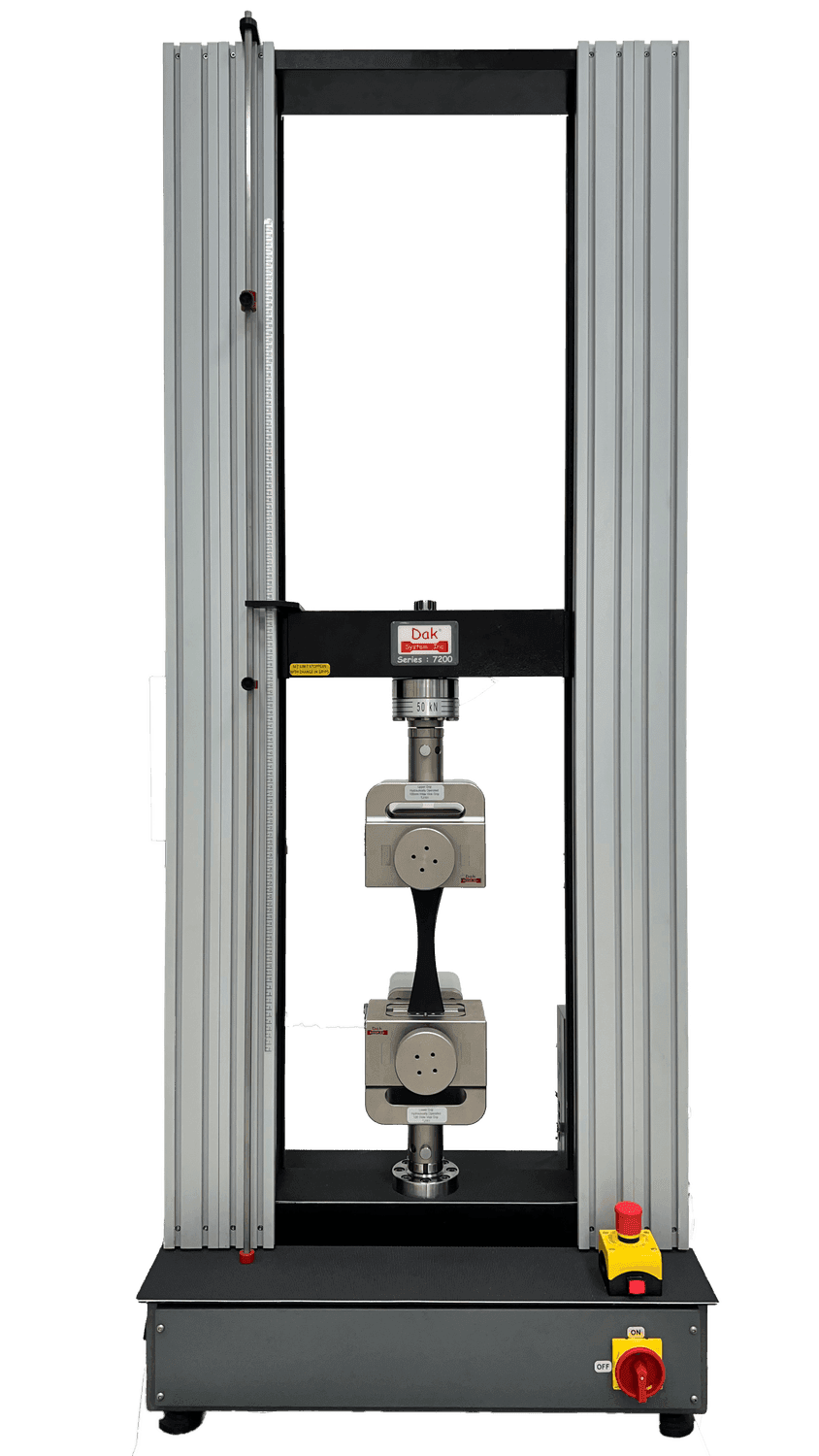
Bring varied mechanical tests, flexible test programming and detailed analysis into one platform. Follow Me mode, Safe Jog and sample protection support specimen setup, while live displays and synchronised video connect the test with its results. Explore Series 7200 for your laboratory's broader testing programme.
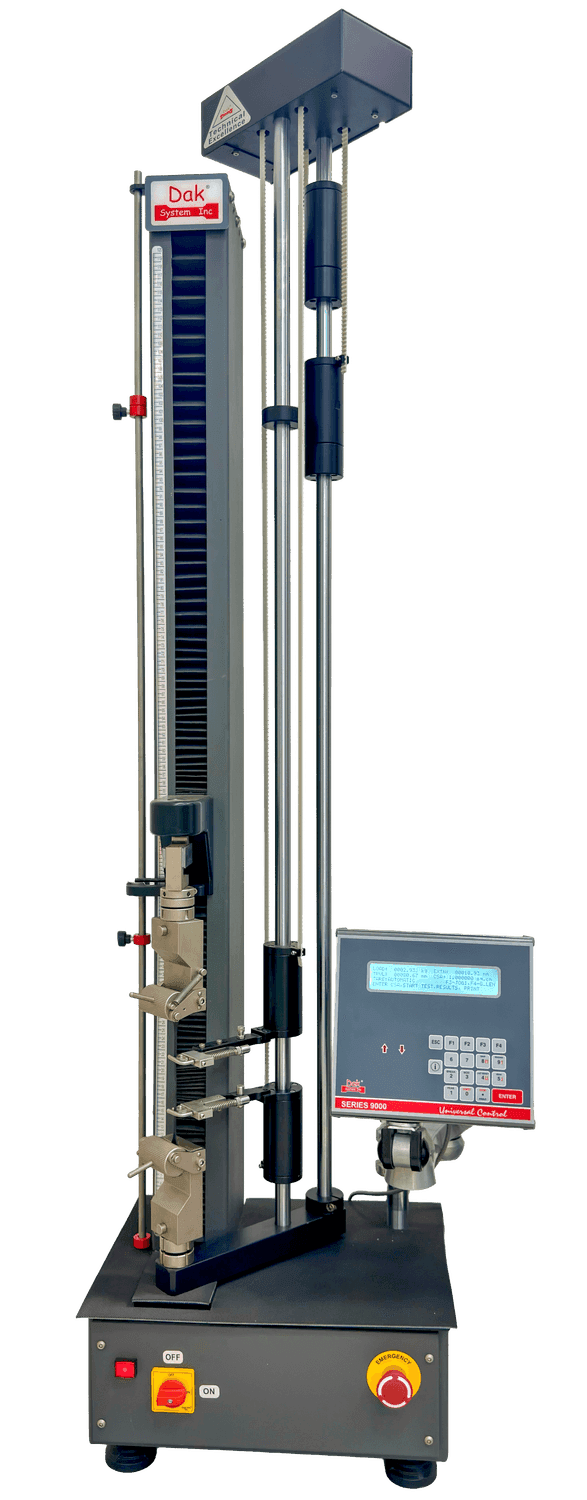
Run everyday mechanical tests with standalone console operation or PC-based testing, analysis and reporting. The Series 9000 provides a focused route for routine quality control, with frame, gripping and measurement choices built around the specimens and methods your laboratory uses.
Search a designation or filter the existing library by material, test type or standards body. Open the relevant method guide for specimen, procedure and reporting information.
PE electrofusion assemblies — peel decohesion and crushing decohesion tests.
Static and kinetic coefficients of friction of plastic film and sheeting.
Tear resistance (Graves tear) of plastic film and sheeting — initiation tear.
Compressive properties of rigid cellular plastics (foam boards, insulation).
Tensile and tensile-adhesion properties of rigid cellular plastics.
Microtensile properties of plastics using miniature specimens (limited material availability).
Trouser tear and graves tear of films.
Longitudinal tensile properties of fibreglass (GRP/FRP) pipe and tube.
Apparent hoop tensile strength of plastic or reinforced pipe by split-disk method.
Parallel-plate loading of plastic pipe — pipe stiffness and ring deflection.
Tensile, compressive and flexural creep and creep-rupture of plastics (long-duration static load).
Lap-shear strength of adhesively bonded plastic and FRP joints.
In-plane shear strength of reinforced plastics — withdrawn 2024, superseded in practice by ASTM D5379. Equivalent to: ASTM D5379
Performance strength of geomembranes by wide-width strip tensile method.
Tensile properties of reinforced thermosetting plastics using straight-sided specimens.
Protrusion puncture resistance of stretch wrap films (slow-rate probe).
Flexural properties of plastics by 4-point bending.
Tensile properties of unreinforced and reinforced rigid plastics (dog-bone specimens).
Tensile properties of nonreinforced polyethylene and flexible polypropylene geomembranes.
HDPE geomembrane tensile for landfill and pond lining projects.
90° peel resistance of adhesives.
Compressive properties of rigid plastics (cylinder / prism specimens).
Shear strength of plastics by punch-type shear tool.
Flexural properties (3-point bending) of unreinforced and reinforced plastics.
Tensile properties of thin plastic sheeting and films (<1 mm thick).
Bearing strength of plastics (pin bearing, tension or compression loading).
PP/HDPE woven sack fabric and seam strength (cement, fertilizer, food-grain packaging).
Plane-strain fracture toughness and strain energy release rate of plastics.
Tensile creep behaviour of plastics under constant load.
Flexural creep of plastics by three-point loading, under constant load.
PE butt-fusion pipe joints — tensile strength and failure mode of test specimens.
Tensile and peel decohesion testing of PE pipe welded joints.
PE electrofusion assemblies — peel decohesion and crushing decohesion tests.
Determination of flexural properties of plastics (3-point bend).
Moulded part and compound qualification — tensile.
General principles and test conditions for tensile properties of moulding and extrusion plastics.
Tensile properties of plastic films and sheets.
Determination of compressive properties of plastics.
PE / PVC / PPR pressure pipe tensile and hoop strength.
Tensile properties of thermoplastics pipes (PE, PP, PVC pipe specimens).
Trouser tear and Elmendorf tear resistance for plastic films and sheeting.
Interior and exterior plastic trims, bumpers — tensile and flexural properties.
Compression properties of rigid cellular plastics.
Ring stiffness of thermoplastics pipes.
Showing 1–8 of 44 standards
Tell DAK Engineering what you need to test and which decisions the results must support. A useful starting brief includes your material or product, specimen dimensions, required method or property, expected forces and extension where known, and your laboratory location and workload.
For film, include thickness and test direction. For pipes, include diameter and wall construction. For bonded assemblies, describe the substrates and joint geometry. These details help shape a quotation around your application rather than a machine capacity alone.
DAK System manufactures material testing machines in India. Explore our company and support information, or send your testing requirements to discuss a system for your laboratory.